

Bienvenidos

Text Styles

These are styles that can be added through the tools and style dropdown in the rich text editor (Content blocks, other areas with a rich text editor like the content blocks')


H2 Title

H3 Title

H4 Title

H5 Title
H6 Title

Paragraph Copy Lorem Ipsum

Color Text

Color2 Text

Color3 Text

Grey Text

Large Text

Larger Text

Small Text

Uppercase Text

Thin Text

Extra Bold Text

Color, Color2, Color 3, and Grey Text in a title

Lists

  1. List Item 1
  2. List Item 2
    • List item 1
    • List item 2
  3. List Item 3
  4. List item 4

Other

Callout Text Here

Quotation Cite

Line Rules

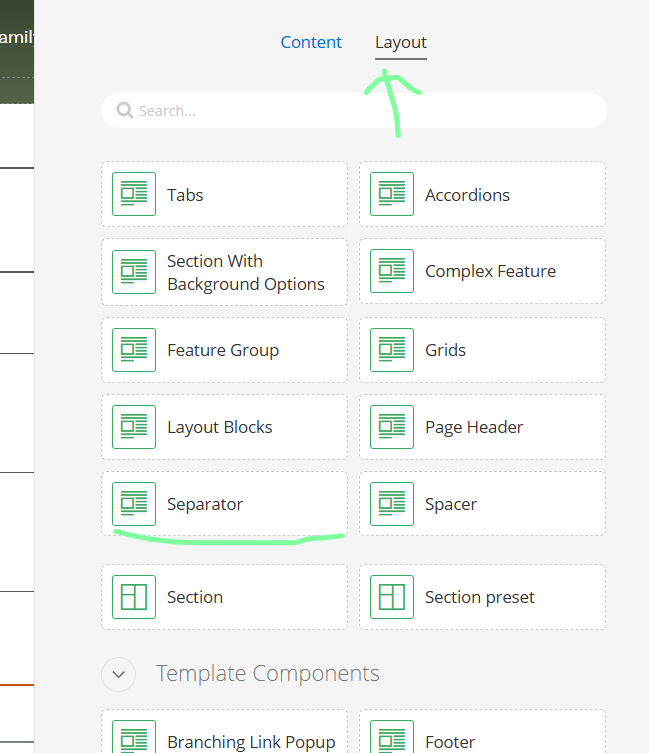
Separator


Further styles and more customized separators are available under the "separators" tool under "layout" 


Link Styles

The button variants should only be used when a single button is needed and it doesn't need to be shared anywhere. These can be added through the "Link Style" dropdown under "More Options" when creating a link in the rich text editor.

Basic Link

Link Style Button

Link Style Secondary Button

Link Style Accent Button

Emphasized Link

Buttons

There are four ways to create a button.

A button can be added through the link style dropdown in any link within a rich text editor or content block.

CTAs widget can provide buttons unique to a page.

Furthermore, buttons can be added to the buttons widget. Buttons added to the buttons widget are shared between all instances of the button. Shared buttons are recommended because if a link is changed later, then all buttons linking to the link be changed at once.

Call to Action (CTAs) Widget

CTAs are recommended when no more than two buttons are needed, and the buttons are unique to the page and aren't to be used anywhere else on the site.

The options available in the CTAs widget are also more limited than the options available through the shared buttons widget.

CTA Button Learn More about CTAs

Shared Buttons

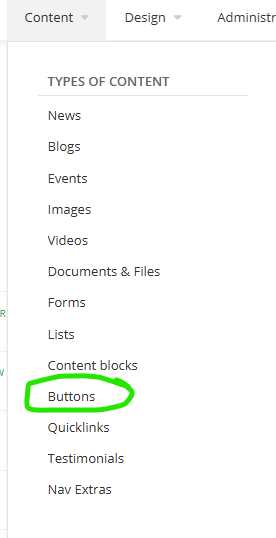
Buttons can be created under content.

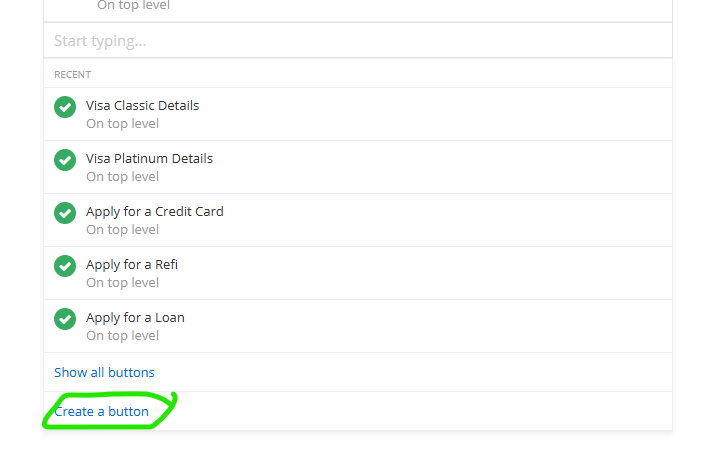
They can also be created when selecting buttons in the widget.

Buttons can be added to the page either through the dedicated, full-optioned button widget or through the content list widget.

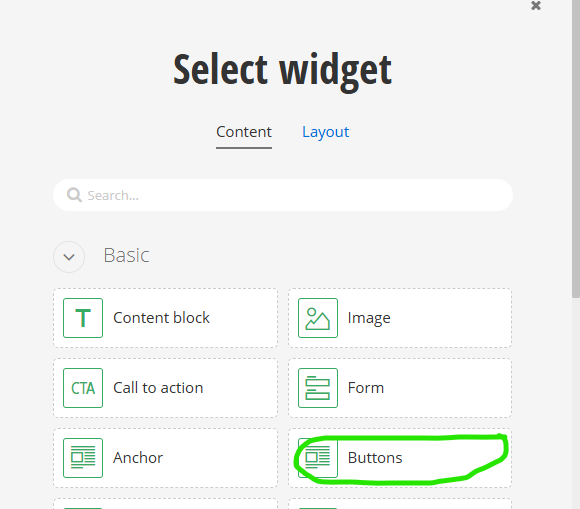
Using the buttons widget to add buttons

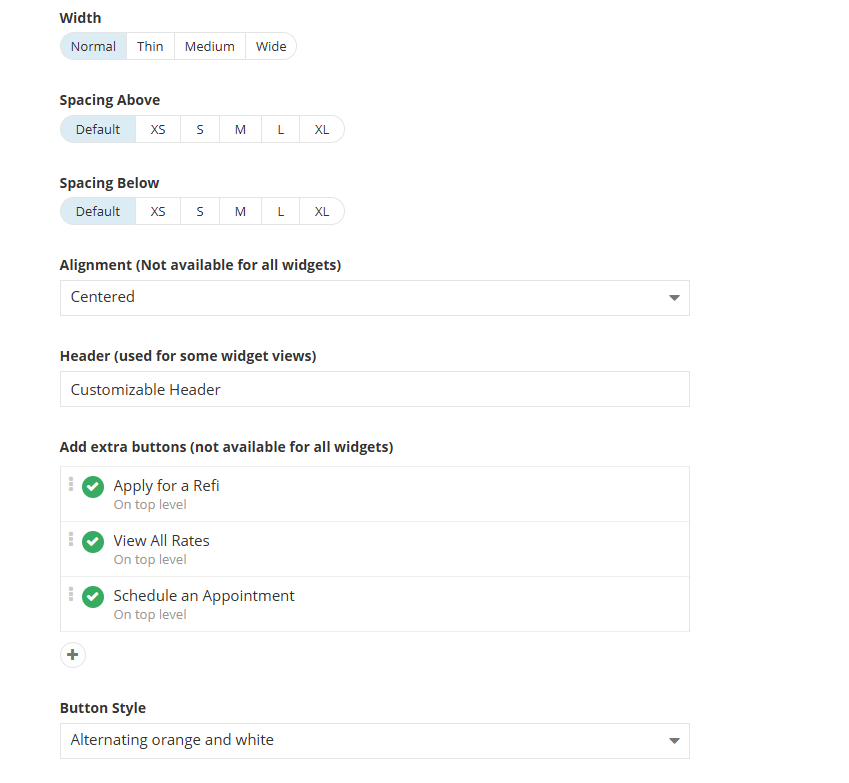
The buttons widget is specialized for buttons and contains all button options.

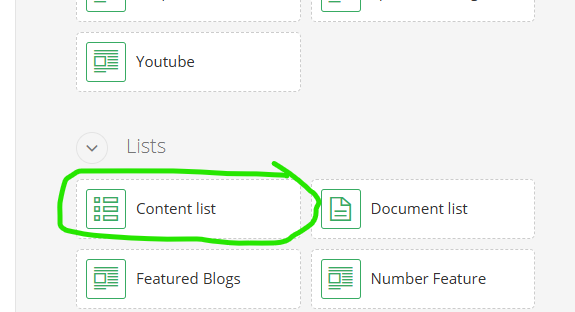
Using the content List widget to make buttons

Buttons can also be added through the site's standard content list widget.

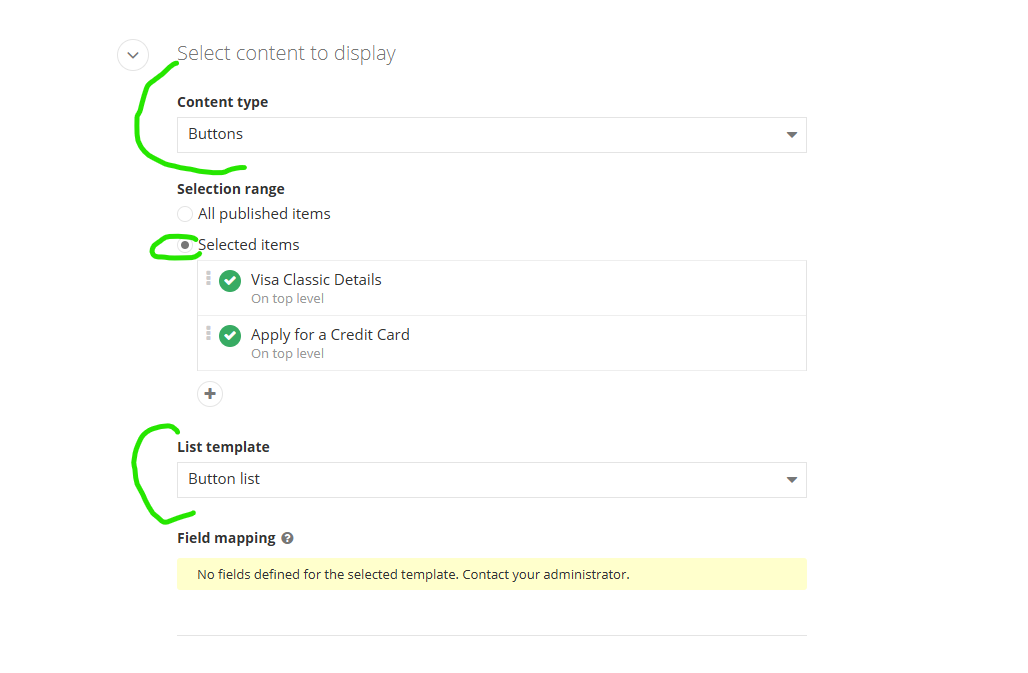
Once dropped, the list settings must be adjusted as follows: 

Only 5 styles are available in the content list widget.

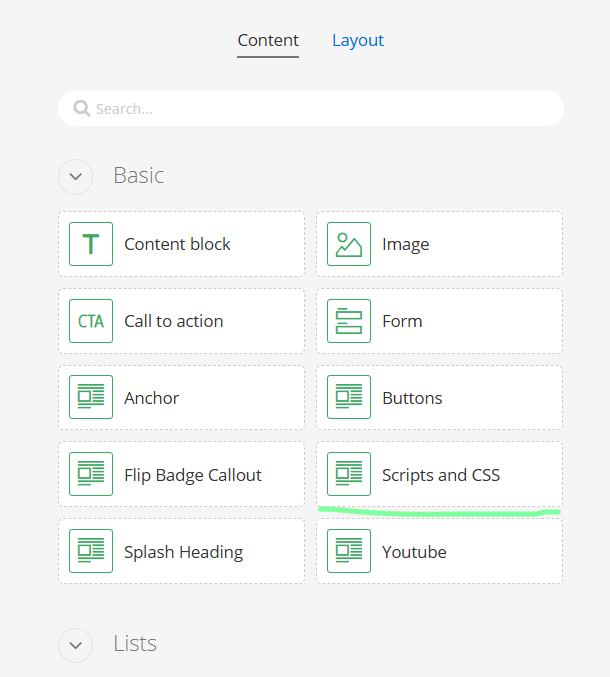
Flip Badge Callout

A very simple way of making this callout.

By default, the front is the fibre logo, but it can be customized.

Just drop content here after adding the widget

  • It's simple
  • It's easy

Lorem ipsum dolor sit amet, consectetur adipiscing elit, sed do eiusmod tempor incididunt ut labore et dolore magna aliqua. Quis ipsum suspendisse ultrices gravida. Risus commodo viverra maecenas accumsan lacus vel facilisis. Lorem ipsum dolor .

Splash Heading

These are the headings used on the home page. Although they are not used on the inside pages by default, support for them exists to allow future use in potential landing pages.

Pre-Heading

Splash Heading

Anchor

Anchor is used to easily add a location to the page that can be linked to by any link's "anchor" field. Note that each anchor's value can only be used once per page, or the linking will break.

Click to jump to the anchor below the paragraph

Lorem ipsum dolor sit amet, consectetur adipiscing elit, sed do eiusmod tempor incididunt ut labore et dolore magna aliqua. Quis ipsum suspendisse ultrices gravida. Risus commodo viverra maecenas accumsan lacus vel facilisis. Lorem ipsum dolor sit amet, consectetur adipiscing elit, sed do eiusmod tempor incididunt ut labore et dolore magna aliqua. Quis ipsum suspendisse ultrices gravida. Risus commodo viverra maecenas accumsan lacus vel facilisis. Lorem ipsum dolor sit amet, consectetur adipiscing elit, sed do eiusmod tempor incididunt ut labore et dolore magna aliqua. Quis ipsum suspendisse ultrices gravida. Risus commodo viverra maecenas accumsan lacus vel facilisis. Lorem ipsum dolor sit amet, consectetur adipiscing elit, sed do eiusmod tempor incididunt ut labore et dolore magna aliqua. Quis ipsum suspendisse ultrices gravida. Risus commodo viverra maecenas accumsan lacus vel facilisis. Lorem ipsum dolor sit amet, consectetur adipiscing elit, sed do eiusmod tempor incididunt ut labore et dolore magna aliqua. Quis ipsum suspendisse ultrices gravida. Risus commodo viverra maecenas accumsan lacus vel facilisis. Lorem ipsum dolor sit amet, consectetur adipiscing elit, sed do eiusmod tempor incididunt ut labore et dolore magna aliqua. Quis ipsum suspendisse ultrices gravida. Risus commodo viverra maecenas accumsan lacus vel facilisis. 

Youtube

Allows easy embedding of a youtube video. Simply copy this part of the end of the youtube video's url (after ?v= and before any other &) 

and paste it into the video id field in the widget's edit panel. 

The Content List

A number of different types of content can be selected through this widget.

Depending on the widget, various other options may be available under list settings. Order By, Spacing, and Width are available for all widgets. Buttons are available for quicklinks, lists, and some testimonial templates and styles. Header is available for quicklinks, lists, blog lists, and some testimonial templates. Alignment is only relevant for buttons (for now).

Only blog and news take advantage of the items  under detail view settings.

Blogs

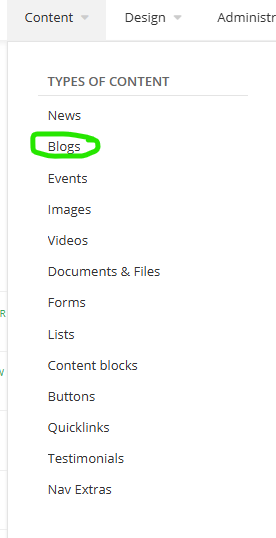
Blog posts can be added under content - > Blogs, then clicking into the blog the post should be added to.

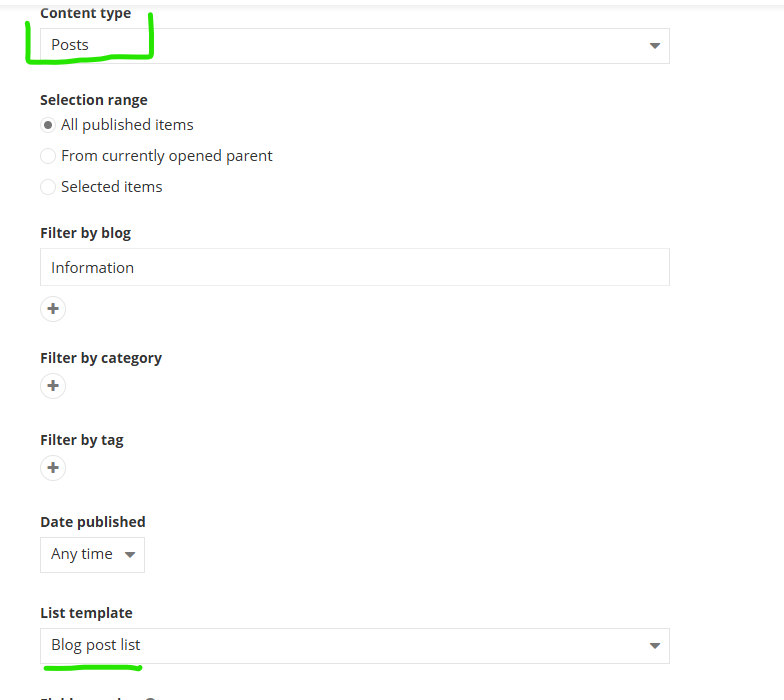
To add the posts to the page, "Posts" should be set as the Content type, and "Blog post list" should be set as the template.

To display all blog posts, all published items can be set to show without modification. However, the posts can be set to draw only posts from a specific blog and/or category, which allows more nuanced selection of content. For example, featured posts on the auto loans page can be set to draw only posts from the Information blog and the Auto Loans category. This allows for a much easier maintenance of the post system across multiple pages, because the post lists can then automatically update with the latest information as new posts are added, without each post list needing the posts selected manually every time.

Style 1 shows all posts.

Buying a home is a major financial decision, and the process can feel overwhelming even if you’ve done it before.

There’s more to it than finding a house you like. You’ll need to understand your budget, review your credit, compare mortgage types, get pre-approved, make an offer, prepare for closing costs, and plan for the ongoing expenses that come with owning a home. Fibre Federal Credit Union and TLC’s mortgage loans are a useful starting point for reviewing home loan programs before you apply. 

The process is easier to manage when you break it into steps. This guide walks through the homeownership journey from early planning to closing day, plus what to know about managing or refinancing your mortgage after you buy.

MAKE SURE YOU’RE FINANCIALLY READY

Before you start browsing home listings, take time to review whether buying makes sense for your budget and lifestyle. Homeownership allows you to build equity and have more control over your space, but it also comes with expenses renters usually don’t have, including repairs, maintenance, property taxes, and insurance. 

Buying may make sense if:

  • You have a steady income

  • Your monthly debts are manageable

  • You have savings set aside for upfront costs

  • You have an emergency fund for unexpected expenses

  • You plan to stay in the home for several years

If you’re still comparing renting and buying, use the rent vs. buy calculator to estimate how the numbers may look based on your current situation.

Check your credit

Your credit score may affect whether you qualify for a mortgage and the interest rate you receive. Even a small difference in your rate can change your monthly payment and the total interest paid over the life of the loan.

Before applying, review your credit report for errors, make on-time payments, and work on paying down high credit card balances. Credit improvements can take several months to show, so it’s best to start early.

Know your debt-to-income ratio

Lenders also review your debt-to-income ratio, or DTI. This compares your gross monthly income to your monthly debt payments, including credit cards, auto loans, student loans, and other recurring obligations.

Many lenders prefer a DTI of 36% or lower for home loans, although requirements can vary by loan type and borrower profile. Use the debt-to-income calculator to estimate your ratio before you apply. If your DTI is higher than you’d like, paying down debt or avoiding new loans before applying may improve your position.

Plan for expenses

Homebuying costs go beyond the purchase price. Before you apply, budget for upfront expenses as well as the costs that continue after closing. 

At a minimum, budget for:

  • Down payment: This varies by loan type. Some loans require little or no down payment, while others may require more.

  • Closing costs: These are the fees and expenses paid to complete the purchase and are commonly 2% to 5% of the loan amount. In some cases, the closing costs can be negotiated to be paid by the seller.

  • Mortgage insurance: If your down payment is below 20% on a conventional loan, you may need private mortgage insurance, or PMI. FHA, USDA, and VA loans have their own mortgage insurance or funding fee structures.

  • Taxes and insurance: Property taxes and homeowners insurance can affect your monthly payment and total housing budget.

  • Cash reserves: A home inspection may not catch every issue, so it’s smart to keep savings available for repairs, maintenance, and move-in costs.

UNDERSTAND YOUR MORTGAGE OPTIONS

Mortgage loans are not all structured the same way. The loan type you choose can affect your down payment, monthly payment, mortgage insurance, rate structure, and long-term costs.

For a deeper breakdown, Fibre Federal & TLC also has a guide to different types of home loans

Fixed-Rate Mortgages

A fixed-rate mortgage keeps the same interest rate for the full loan term. That means the principal and interest portion of your payment stays consistent, which can make monthly budgeting more predictable.

Depending on the lender and loan program, down payments may start as low as 3%. If you put less than 20% down on a conventional mortgage, PMI may be required until you build enough equity.

The loan term also matters. A shorter term may come with a higher monthly payment but less total interest, while a longer term may lower the monthly payment but increase the total interest paid. Before choosing, compare how different mortgage terms affect your loan.

Adjustable-Rate Mortgages (ARMs)

An adjustable-rate mortgage, or ARM, starts with an introductory rate for a set period. After that period ends, the rate can adjust based on market conditions and the terms of the loan.

An ARM may appeal to buyers who expect to sell, refinance, or pay off the loan before the introductory period ends. Because the payment can change later, it’s important to understand the adjustment schedule, rate caps, and how much your payment could increase.

FHA Loans

FHA loans are backed by the Federal Housing Administration and issued by private lenders. They can work well for borrowers with limited down payment savings or credit history that does not meet conventional loan requirements. 

Down payments can be as low as 3.5%. FHA loans also require mortgage insurance, including an upfront mortgage insurance premium and an annual premium paid monthly. For many borrowers, FHA mortgage insurance lasts for the life of the loan, although buyers who put at least 10% down may have it removed after 11 years.

Because FHA and conventional loans have different credit, down payment, and mortgage insurance requirements, it’s worth comparing FHA loans vs. conventional mortgages before deciding which path makes sense.

USDA Loans

USDA loans are backed by the U.S. Department of Agriculture and issued by private lenders. They apply to eligible homes in certain rural and suburban areas, and qualified borrowers can buy with no down payment. 

Borrowers must meet income and property eligibility requirements. USDA loans also include an upfront guarantee fee and an ongoing annual fee paid monthly.

VA Loans

VA loans are backed by the U.S. Department of Veterans Affairs and issued by private lenders. They are available to eligible service members, veterans, and surviving spouses.

VA loans do not require a down payment or PMI, which can lower the upfront cost of buying. Borrowers need a Certificate of Eligibility, or COE, to confirm they meet service requirements. Most VA loans also include a one-time funding fee, which can be paid at closing or rolled into the loan.

Jumbo Loans

A jumbo loan is a mortgage that exceeds the conventional loan limits set by the Federal Housing Finance Agency. The exact threshold depends on the property’s location.

Because jumbo loans are larger and are not backed by a government agency, qualification requirements are usually more strict. Borrowers may need a higher credit score, a larger down payment, stronger cash reserves, and a lower DTI ratio.

COMPARE LENDERS AND LOAN ESTIMATES

Once you understand the main mortgage types, compare lenders before choosing where to apply. Rates matter, but they are not the only factor. Review the annual percentage rate, closing costs, lender fees, loan terms, estimated monthly payment, and how clearly each lender explains the process.

Use the mortgage comparison calculator to compare two loan scenarios side by side. This shows how rate, term, fees, and payment differences affect the total cost of borrowing. 

A credit union like Fibre Federal & TLC also brings local knowledge to the mortgage process. Our loan officers understand our area and can explain which loan programs match your budget, timeline, and homebuying plans. 

GET PRE-APPROVED FOR A MORTGAGE

Pre-approval is one of the most important early steps in the homebuying process. During pre-approval, a lender reviews your finances and estimates how much you may be able to borrow. It’s important to note that this process includes a hard credit check. 

Use the loan amount calculator to estimate how different loan amounts affect your monthly payment. 

To apply for mortgage pre-approval, be ready to provide:

  • Government-issued photo ID

  • Recent pay stubs

  • Tax returns and W-2s

  • Recent bank statements

  • A list of monthly debts

  • Documentation for other income or assets, if applicable

Once you’re pre-approved, your lender will provide a pre-approval letter that you can share with your real estate agent and sellers. This can strengthen your offer because it shows you have already begun the financing process.

Pre-approval is not the same as final loan approval. Final approval includes a more detailed review of your finances, another hard credit check, a property appraisal, a title review, and underwriting.

FIND YOUR HOME AND MAKE AN OFFER

After pre-approval, you can start searching within a realistic price range. A real estate agent can walk you through local listings, schedule showings, and compare homes based on price, condition, location, and market demand.

When you find a home you want to buy, your agent will prepare an offer that includes the purchase price, proposed closing date, earnest money deposit, and any contingencies. Common contingencies include financing, appraisal, and inspection protections. These can give you a way to renegotiate or walk away if the home does not appraise, the loan is not approved, or the inspection reveals major issues.

COMPLETE THE HOMEBUYING PROCESS

If your offer is accepted, the purchase moves into the final approval and closing stage. Several things happen during this period:

  • Home inspection: The inspection looks for issues with the property’s structure, systems, and condition. If problems are found, you may be able to negotiate repairs, credits, or a price adjustment.

  • Appraisal: Your lender orders an appraisal to confirm the home’s value supports the loan amount.

  • Underwriting: The lender reviews your income, employment, credit, assets, debts, and property details before issuing final approval.

  • Final walkthrough: Before closing, you’ll walk through the home to confirm it is in the agreed-upon condition.

  • Closing: You’ll review and sign loan documents, pay closing costs, and receive the final loan terms in your closing disclosure.

Closing costs can include lender fees, title fees, appraisal costs, prepaid taxes, prepaid insurance, and escrow deposits. Use the closing costs calculator to estimate how much you may need to bring to closing.

Once the documents are signed and funds are transferred, you receive the keys to your new home.

PLAN FOR THE ONGOING COSTS OF HOMEOWNERSHIP 

The cost of owning a home does not end at closing. Your monthly mortgage payment may include principal, interest, property taxes, homeowners insurance, mortgage insurance, and HOA dues if they apply. Some of these costs may be included in an escrow account and paid by your lender on your behalf.

You’ll also need to plan for regular upkeep and unexpected repairs. Common homeowner expenses include:

  • Property taxes

  • Homeowners insurance

  • Utilities

  • Yard care

  • HOA fees, if applicable

  • Maintenance and repairs

  • Appliance, HVAC, roof, plumbing, or electrical repairs

Many homeowners set aside 1% to 3% of their home’s value each year for maintenance and repairs. For a $300,000 home, that equals about $3,000 to $9,000 annually. A dedicated maintenance fund can make it easier to handle larger repairs without relying on credit cards or draining emergency savings.

MANAGE YOUR MORTGAGE AFTER PURCHASE 

After you buy your home, each mortgage payment builds equity as you pay down the loan balance. Extra principal payments can build equity faster. Even one extra payment per year can shorten the life of a 30-year mortgage and lower total interest costs.

As your equity grows, you could borrow against it with a home equity loan or home equity line of credit. Homeowners often use these funds for home improvements, repairs, or larger planned purchases, but the loan uses your home as collateral, so it’s important to borrow carefully. 

You may also decide to refinance your mortgage later. Refinancing replaces your current home loan with a new one. Homeowners may refinance to lower their interest rate, change the loan term, move from an adjustable rate to a fixed rate, adjust their monthly payment, or borrow from available equity. If you’re weighing those choices, compare a home equity loan vs. a cash-out refinance before deciding.

Refinancing does come with costs, commonly 2% to 5% of the loan amount. It may not make sense if the savings are too small, you plan to move soon, or you are already close to paying off the loan. Use the refinance calculator to compare your current loan with a new loan before deciding.

GET THE KEYS TO YOUR NEW HOME

Buying a home is easier to navigate when you understand each step before you get there. Start by reviewing your budget and credit, comparing mortgage types, getting pre-approved, preparing for closing costs, and planning for the ongoing expenses that come with owning a home.

Fibre Federal & TLC can walk you through the mortgage process and explain available home loan programs based on your budget, timeline, and property plans.

Ready to begin? Review your mortgage loan choices and take the next step toward homeownership.
Explore Our Mortgage Loans

Style 2 shows the latest 4 posts. 

Buying a home is a major financial decision, and the process can feel overwhelming even if you’ve done it before.

There’s more to it than finding a house you like. You’ll need to understand your budget, review your credit, compare mortgage types, get pre-approved, make an offer, prepare for closing costs, and plan for the ongoing expenses that come with owning a home. Fibre Federal Credit Union and TLC’s mortgage loans are a useful starting point for reviewing home loan programs before you apply. 

The process is easier to manage when you break it into steps. This guide walks through the homeownership journey from early planning to closing day, plus what to know about managing or refinancing your mortgage after you buy.

MAKE SURE YOU’RE FINANCIALLY READY

Before you start browsing home listings, take time to review whether buying makes sense for your budget and lifestyle. Homeownership allows you to build equity and have more control over your space, but it also comes with expenses renters usually don’t have, including repairs, maintenance, property taxes, and insurance. 

Buying may make sense if:

  • You have a steady income

  • Your monthly debts are manageable

  • You have savings set aside for upfront costs

  • You have an emergency fund for unexpected expenses

  • You plan to stay in the home for several years

If you’re still comparing renting and buying, use the rent vs. buy calculator to estimate how the numbers may look based on your current situation.

Check your credit

Your credit score may affect whether you qualify for a mortgage and the interest rate you receive. Even a small difference in your rate can change your monthly payment and the total interest paid over the life of the loan.

Before applying, review your credit report for errors, make on-time payments, and work on paying down high credit card balances. Credit improvements can take several months to show, so it’s best to start early.

Know your debt-to-income ratio

Lenders also review your debt-to-income ratio, or DTI. This compares your gross monthly income to your monthly debt payments, including credit cards, auto loans, student loans, and other recurring obligations.

Many lenders prefer a DTI of 36% or lower for home loans, although requirements can vary by loan type and borrower profile. Use the debt-to-income calculator to estimate your ratio before you apply. If your DTI is higher than you’d like, paying down debt or avoiding new loans before applying may improve your position.

Plan for expenses

Homebuying costs go beyond the purchase price. Before you apply, budget for upfront expenses as well as the costs that continue after closing. 

At a minimum, budget for:

  • Down payment: This varies by loan type. Some loans require little or no down payment, while others may require more.

  • Closing costs: These are the fees and expenses paid to complete the purchase and are commonly 2% to 5% of the loan amount. In some cases, the closing costs can be negotiated to be paid by the seller.

  • Mortgage insurance: If your down payment is below 20% on a conventional loan, you may need private mortgage insurance, or PMI. FHA, USDA, and VA loans have their own mortgage insurance or funding fee structures.

  • Taxes and insurance: Property taxes and homeowners insurance can affect your monthly payment and total housing budget.

  • Cash reserves: A home inspection may not catch every issue, so it’s smart to keep savings available for repairs, maintenance, and move-in costs.

UNDERSTAND YOUR MORTGAGE OPTIONS

Mortgage loans are not all structured the same way. The loan type you choose can affect your down payment, monthly payment, mortgage insurance, rate structure, and long-term costs.

For a deeper breakdown, Fibre Federal & TLC also has a guide to different types of home loans

Fixed-Rate Mortgages

A fixed-rate mortgage keeps the same interest rate for the full loan term. That means the principal and interest portion of your payment stays consistent, which can make monthly budgeting more predictable.

Depending on the lender and loan program, down payments may start as low as 3%. If you put less than 20% down on a conventional mortgage, PMI may be required until you build enough equity.

The loan term also matters. A shorter term may come with a higher monthly payment but less total interest, while a longer term may lower the monthly payment but increase the total interest paid. Before choosing, compare how different mortgage terms affect your loan.

Adjustable-Rate Mortgages (ARMs)

An adjustable-rate mortgage, or ARM, starts with an introductory rate for a set period. After that period ends, the rate can adjust based on market conditions and the terms of the loan.

An ARM may appeal to buyers who expect to sell, refinance, or pay off the loan before the introductory period ends. Because the payment can change later, it’s important to understand the adjustment schedule, rate caps, and how much your payment could increase.

FHA Loans

FHA loans are backed by the Federal Housing Administration and issued by private lenders. They can work well for borrowers with limited down payment savings or credit history that does not meet conventional loan requirements. 

Down payments can be as low as 3.5%. FHA loans also require mortgage insurance, including an upfront mortgage insurance premium and an annual premium paid monthly. For many borrowers, FHA mortgage insurance lasts for the life of the loan, although buyers who put at least 10% down may have it removed after 11 years.

Because FHA and conventional loans have different credit, down payment, and mortgage insurance requirements, it’s worth comparing FHA loans vs. conventional mortgages before deciding which path makes sense.

USDA Loans

USDA loans are backed by the U.S. Department of Agriculture and issued by private lenders. They apply to eligible homes in certain rural and suburban areas, and qualified borrowers can buy with no down payment. 

Borrowers must meet income and property eligibility requirements. USDA loans also include an upfront guarantee fee and an ongoing annual fee paid monthly.

VA Loans

VA loans are backed by the U.S. Department of Veterans Affairs and issued by private lenders. They are available to eligible service members, veterans, and surviving spouses.

VA loans do not require a down payment or PMI, which can lower the upfront cost of buying. Borrowers need a Certificate of Eligibility, or COE, to confirm they meet service requirements. Most VA loans also include a one-time funding fee, which can be paid at closing or rolled into the loan.

Jumbo Loans

A jumbo loan is a mortgage that exceeds the conventional loan limits set by the Federal Housing Finance Agency. The exact threshold depends on the property’s location.

Because jumbo loans are larger and are not backed by a government agency, qualification requirements are usually more strict. Borrowers may need a higher credit score, a larger down payment, stronger cash reserves, and a lower DTI ratio.

COMPARE LENDERS AND LOAN ESTIMATES

Once you understand the main mortgage types, compare lenders before choosing where to apply. Rates matter, but they are not the only factor. Review the annual percentage rate, closing costs, lender fees, loan terms, estimated monthly payment, and how clearly each lender explains the process.

Use the mortgage comparison calculator to compare two loan scenarios side by side. This shows how rate, term, fees, and payment differences affect the total cost of borrowing. 

A credit union like Fibre Federal & TLC also brings local knowledge to the mortgage process. Our loan officers understand our area and can explain which loan programs match your budget, timeline, and homebuying plans. 

GET PRE-APPROVED FOR A MORTGAGE

Pre-approval is one of the most important early steps in the homebuying process. During pre-approval, a lender reviews your finances and estimates how much you may be able to borrow. It’s important to note that this process includes a hard credit check. 

Use the loan amount calculator to estimate how different loan amounts affect your monthly payment. 

To apply for mortgage pre-approval, be ready to provide:

  • Government-issued photo ID

  • Recent pay stubs

  • Tax returns and W-2s

  • Recent bank statements

  • A list of monthly debts

  • Documentation for other income or assets, if applicable

Once you’re pre-approved, your lender will provide a pre-approval letter that you can share with your real estate agent and sellers. This can strengthen your offer because it shows you have already begun the financing process.

Pre-approval is not the same as final loan approval. Final approval includes a more detailed review of your finances, another hard credit check, a property appraisal, a title review, and underwriting.

FIND YOUR HOME AND MAKE AN OFFER

After pre-approval, you can start searching within a realistic price range. A real estate agent can walk you through local listings, schedule showings, and compare homes based on price, condition, location, and market demand.

When you find a home you want to buy, your agent will prepare an offer that includes the purchase price, proposed closing date, earnest money deposit, and any contingencies. Common contingencies include financing, appraisal, and inspection protections. These can give you a way to renegotiate or walk away if the home does not appraise, the loan is not approved, or the inspection reveals major issues.

COMPLETE THE HOMEBUYING PROCESS

If your offer is accepted, the purchase moves into the final approval and closing stage. Several things happen during this period:

  • Home inspection: The inspection looks for issues with the property’s structure, systems, and condition. If problems are found, you may be able to negotiate repairs, credits, or a price adjustment.

  • Appraisal: Your lender orders an appraisal to confirm the home’s value supports the loan amount.

  • Underwriting: The lender reviews your income, employment, credit, assets, debts, and property details before issuing final approval.

  • Final walkthrough: Before closing, you’ll walk through the home to confirm it is in the agreed-upon condition.

  • Closing: You’ll review and sign loan documents, pay closing costs, and receive the final loan terms in your closing disclosure.

Closing costs can include lender fees, title fees, appraisal costs, prepaid taxes, prepaid insurance, and escrow deposits. Use the closing costs calculator to estimate how much you may need to bring to closing.

Once the documents are signed and funds are transferred, you receive the keys to your new home.

PLAN FOR THE ONGOING COSTS OF HOMEOWNERSHIP 

The cost of owning a home does not end at closing. Your monthly mortgage payment may include principal, interest, property taxes, homeowners insurance, mortgage insurance, and HOA dues if they apply. Some of these costs may be included in an escrow account and paid by your lender on your behalf.

You’ll also need to plan for regular upkeep and unexpected repairs. Common homeowner expenses include:

  • Property taxes

  • Homeowners insurance

  • Utilities

  • Yard care

  • HOA fees, if applicable

  • Maintenance and repairs

  • Appliance, HVAC, roof, plumbing, or electrical repairs

Many homeowners set aside 1% to 3% of their home’s value each year for maintenance and repairs. For a $300,000 home, that equals about $3,000 to $9,000 annually. A dedicated maintenance fund can make it easier to handle larger repairs without relying on credit cards or draining emergency savings.

MANAGE YOUR MORTGAGE AFTER PURCHASE 

After you buy your home, each mortgage payment builds equity as you pay down the loan balance. Extra principal payments can build equity faster. Even one extra payment per year can shorten the life of a 30-year mortgage and lower total interest costs.

As your equity grows, you could borrow against it with a home equity loan or home equity line of credit. Homeowners often use these funds for home improvements, repairs, or larger planned purchases, but the loan uses your home as collateral, so it’s important to borrow carefully. 

You may also decide to refinance your mortgage later. Refinancing replaces your current home loan with a new one. Homeowners may refinance to lower their interest rate, change the loan term, move from an adjustable rate to a fixed rate, adjust their monthly payment, or borrow from available equity. If you’re weighing those choices, compare a home equity loan vs. a cash-out refinance before deciding.

Refinancing does come with costs, commonly 2% to 5% of the loan amount. It may not make sense if the savings are too small, you plan to move soon, or you are already close to paying off the loan. Use the refinance calculator to compare your current loan with a new loan before deciding.

GET THE KEYS TO YOUR NEW HOME

Buying a home is easier to navigate when you understand each step before you get there. Start by reviewing your budget and credit, comparing mortgage types, getting pre-approved, preparing for closing costs, and planning for the ongoing expenses that come with owning a home.

Fibre Federal & TLC can walk you through the mortgage process and explain available home loan programs based on your budget, timeline, and property plans.

Ready to begin? Review your mortgage loan choices and take the next step toward homeownership.
Explore Our Mortgage Loans

Style 3 is a slider of posts.

Please do not use this one inside of a tab, unless the tab is the first tab (being hidden on page load can cause issues with the slider's initial calculations.)

Buying a home is a major financial decision, and the process can feel overwhelming even if you’ve done it before.

There’s more to it than finding a house you like. You’ll need to understand your budget, review your credit, compare mortgage types, get pre-approved, make an offer, prepare for closing costs, and plan for the ongoing expenses that come with owning a home. Fibre Federal Credit Union and TLC’s mortgage loans are a useful starting point for reviewing home loan programs before you apply. 

The process is easier to manage when you break it into steps. This guide walks through the homeownership journey from early planning to closing day, plus what to know about managing or refinancing your mortgage after you buy.

MAKE SURE YOU’RE FINANCIALLY READY

Before you start browsing home listings, take time to review whether buying makes sense for your budget and lifestyle. Homeownership allows you to build equity and have more control over your space, but it also comes with expenses renters usually don’t have, including repairs, maintenance, property taxes, and insurance. 

Buying may make sense if:

  • You have a steady income

  • Your monthly debts are manageable

  • You have savings set aside for upfront costs

  • You have an emergency fund for unexpected expenses

  • You plan to stay in the home for several years

If you’re still comparing renting and buying, use the rent vs. buy calculator to estimate how the numbers may look based on your current situation.

Check your credit

Your credit score may affect whether you qualify for a mortgage and the interest rate you receive. Even a small difference in your rate can change your monthly payment and the total interest paid over the life of the loan.

Before applying, review your credit report for errors, make on-time payments, and work on paying down high credit card balances. Credit improvements can take several months to show, so it’s best to start early.

Know your debt-to-income ratio

Lenders also review your debt-to-income ratio, or DTI. This compares your gross monthly income to your monthly debt payments, including credit cards, auto loans, student loans, and other recurring obligations.

Many lenders prefer a DTI of 36% or lower for home loans, although requirements can vary by loan type and borrower profile. Use the debt-to-income calculator to estimate your ratio before you apply. If your DTI is higher than you’d like, paying down debt or avoiding new loans before applying may improve your position.

Plan for expenses

Homebuying costs go beyond the purchase price. Before you apply, budget for upfront expenses as well as the costs that continue after closing. 

At a minimum, budget for:

  • Down payment: This varies by loan type. Some loans require little or no down payment, while others may require more.

  • Closing costs: These are the fees and expenses paid to complete the purchase and are commonly 2% to 5% of the loan amount. In some cases, the closing costs can be negotiated to be paid by the seller.

  • Mortgage insurance: If your down payment is below 20% on a conventional loan, you may need private mortgage insurance, or PMI. FHA, USDA, and VA loans have their own mortgage insurance or funding fee structures.

  • Taxes and insurance: Property taxes and homeowners insurance can affect your monthly payment and total housing budget.

  • Cash reserves: A home inspection may not catch every issue, so it’s smart to keep savings available for repairs, maintenance, and move-in costs.

UNDERSTAND YOUR MORTGAGE OPTIONS

Mortgage loans are not all structured the same way. The loan type you choose can affect your down payment, monthly payment, mortgage insurance, rate structure, and long-term costs.

For a deeper breakdown, Fibre Federal & TLC also has a guide to different types of home loans

Fixed-Rate Mortgages

A fixed-rate mortgage keeps the same interest rate for the full loan term. That means the principal and interest portion of your payment stays consistent, which can make monthly budgeting more predictable.

Depending on the lender and loan program, down payments may start as low as 3%. If you put less than 20% down on a conventional mortgage, PMI may be required until you build enough equity.

The loan term also matters. A shorter term may come with a higher monthly payment but less total interest, while a longer term may lower the monthly payment but increase the total interest paid. Before choosing, compare how different mortgage terms affect your loan.

Adjustable-Rate Mortgages (ARMs)

An adjustable-rate mortgage, or ARM, starts with an introductory rate for a set period. After that period ends, the rate can adjust based on market conditions and the terms of the loan.

An ARM may appeal to buyers who expect to sell, refinance, or pay off the loan before the introductory period ends. Because the payment can change later, it’s important to understand the adjustment schedule, rate caps, and how much your payment could increase.

FHA Loans

FHA loans are backed by the Federal Housing Administration and issued by private lenders. They can work well for borrowers with limited down payment savings or credit history that does not meet conventional loan requirements. 

Down payments can be as low as 3.5%. FHA loans also require mortgage insurance, including an upfront mortgage insurance premium and an annual premium paid monthly. For many borrowers, FHA mortgage insurance lasts for the life of the loan, although buyers who put at least 10% down may have it removed after 11 years.

Because FHA and conventional loans have different credit, down payment, and mortgage insurance requirements, it’s worth comparing FHA loans vs. conventional mortgages before deciding which path makes sense.

USDA Loans

USDA loans are backed by the U.S. Department of Agriculture and issued by private lenders. They apply to eligible homes in certain rural and suburban areas, and qualified borrowers can buy with no down payment. 

Borrowers must meet income and property eligibility requirements. USDA loans also include an upfront guarantee fee and an ongoing annual fee paid monthly.

VA Loans

VA loans are backed by the U.S. Department of Veterans Affairs and issued by private lenders. They are available to eligible service members, veterans, and surviving spouses.

VA loans do not require a down payment or PMI, which can lower the upfront cost of buying. Borrowers need a Certificate of Eligibility, or COE, to confirm they meet service requirements. Most VA loans also include a one-time funding fee, which can be paid at closing or rolled into the loan.

Jumbo Loans

A jumbo loan is a mortgage that exceeds the conventional loan limits set by the Federal Housing Finance Agency. The exact threshold depends on the property’s location.

Because jumbo loans are larger and are not backed by a government agency, qualification requirements are usually more strict. Borrowers may need a higher credit score, a larger down payment, stronger cash reserves, and a lower DTI ratio.

COMPARE LENDERS AND LOAN ESTIMATES

Once you understand the main mortgage types, compare lenders before choosing where to apply. Rates matter, but they are not the only factor. Review the annual percentage rate, closing costs, lender fees, loan terms, estimated monthly payment, and how clearly each lender explains the process.

Use the mortgage comparison calculator to compare two loan scenarios side by side. This shows how rate, term, fees, and payment differences affect the total cost of borrowing. 

A credit union like Fibre Federal & TLC also brings local knowledge to the mortgage process. Our loan officers understand our area and can explain which loan programs match your budget, timeline, and homebuying plans. 

GET PRE-APPROVED FOR A MORTGAGE

Pre-approval is one of the most important early steps in the homebuying process. During pre-approval, a lender reviews your finances and estimates how much you may be able to borrow. It’s important to note that this process includes a hard credit check. 

Use the loan amount calculator to estimate how different loan amounts affect your monthly payment. 

To apply for mortgage pre-approval, be ready to provide:

  • Government-issued photo ID

  • Recent pay stubs

  • Tax returns and W-2s

  • Recent bank statements

  • A list of monthly debts

  • Documentation for other income or assets, if applicable

Once you’re pre-approved, your lender will provide a pre-approval letter that you can share with your real estate agent and sellers. This can strengthen your offer because it shows you have already begun the financing process.

Pre-approval is not the same as final loan approval. Final approval includes a more detailed review of your finances, another hard credit check, a property appraisal, a title review, and underwriting.

FIND YOUR HOME AND MAKE AN OFFER

After pre-approval, you can start searching within a realistic price range. A real estate agent can walk you through local listings, schedule showings, and compare homes based on price, condition, location, and market demand.

When you find a home you want to buy, your agent will prepare an offer that includes the purchase price, proposed closing date, earnest money deposit, and any contingencies. Common contingencies include financing, appraisal, and inspection protections. These can give you a way to renegotiate or walk away if the home does not appraise, the loan is not approved, or the inspection reveals major issues.

COMPLETE THE HOMEBUYING PROCESS

If your offer is accepted, the purchase moves into the final approval and closing stage. Several things happen during this period:

  • Home inspection: The inspection looks for issues with the property’s structure, systems, and condition. If problems are found, you may be able to negotiate repairs, credits, or a price adjustment.

  • Appraisal: Your lender orders an appraisal to confirm the home’s value supports the loan amount.

  • Underwriting: The lender reviews your income, employment, credit, assets, debts, and property details before issuing final approval.

  • Final walkthrough: Before closing, you’ll walk through the home to confirm it is in the agreed-upon condition.

  • Closing: You’ll review and sign loan documents, pay closing costs, and receive the final loan terms in your closing disclosure.

Closing costs can include lender fees, title fees, appraisal costs, prepaid taxes, prepaid insurance, and escrow deposits. Use the closing costs calculator to estimate how much you may need to bring to closing.

Once the documents are signed and funds are transferred, you receive the keys to your new home.

PLAN FOR THE ONGOING COSTS OF HOMEOWNERSHIP 

The cost of owning a home does not end at closing. Your monthly mortgage payment may include principal, interest, property taxes, homeowners insurance, mortgage insurance, and HOA dues if they apply. Some of these costs may be included in an escrow account and paid by your lender on your behalf.

You’ll also need to plan for regular upkeep and unexpected repairs. Common homeowner expenses include:

  • Property taxes

  • Homeowners insurance

  • Utilities

  • Yard care

  • HOA fees, if applicable

  • Maintenance and repairs

  • Appliance, HVAC, roof, plumbing, or electrical repairs

Many homeowners set aside 1% to 3% of their home’s value each year for maintenance and repairs. For a $300,000 home, that equals about $3,000 to $9,000 annually. A dedicated maintenance fund can make it easier to handle larger repairs without relying on credit cards or draining emergency savings.

MANAGE YOUR MORTGAGE AFTER PURCHASE 

After you buy your home, each mortgage payment builds equity as you pay down the loan balance. Extra principal payments can build equity faster. Even one extra payment per year can shorten the life of a 30-year mortgage and lower total interest costs.

As your equity grows, you could borrow against it with a home equity loan or home equity line of credit. Homeowners often use these funds for home improvements, repairs, or larger planned purchases, but the loan uses your home as collateral, so it’s important to borrow carefully. 

You may also decide to refinance your mortgage later. Refinancing replaces your current home loan with a new one. Homeowners may refinance to lower their interest rate, change the loan term, move from an adjustable rate to a fixed rate, adjust their monthly payment, or borrow from available equity. If you’re weighing those choices, compare a home equity loan vs. a cash-out refinance before deciding.

Refinancing does come with costs, commonly 2% to 5% of the loan amount. It may not make sense if the savings are too small, you plan to move soon, or you are already close to paying off the loan. Use the refinance calculator to compare your current loan with a new loan before deciding.

GET THE KEYS TO YOUR NEW HOME

Buying a home is easier to navigate when you understand each step before you get there. Start by reviewing your budget and credit, comparing mortgage types, getting pre-approved, preparing for closing costs, and planning for the ongoing expenses that come with owning a home.

Fibre Federal & TLC can walk you through the mortgage process and explain available home loan programs based on your budget, timeline, and property plans.

Ready to begin? Review your mortgage loan choices and take the next step toward homeownership.
Explore Our Mortgage Loans

List Items

The list content type is an easy and convenient way to create and sort lists of simple FAQs and similar content. List Items display like layout accordions. 

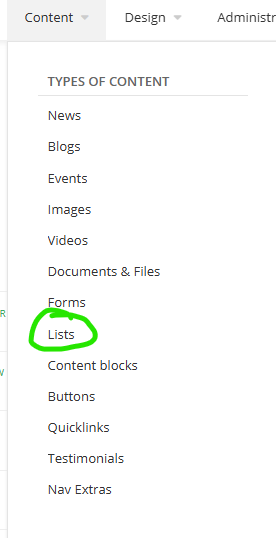
Lists can be created under Content - > Lists.

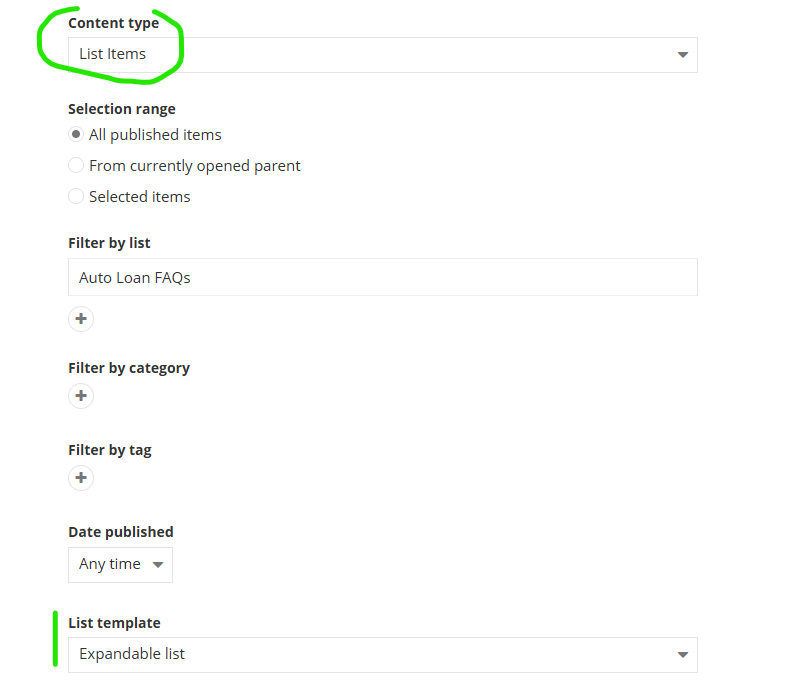
To show list items, select Content type : Lists. It can then be filtered by parent list. List items can also be manually selected if needed. 

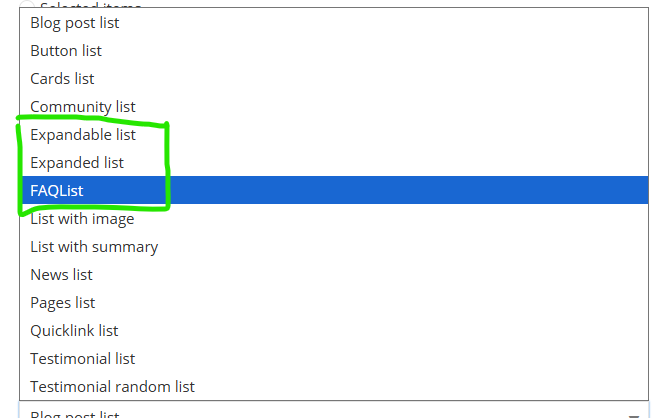
Set the template to either Expandable List, Expanded List, or FAQ list. FAQ list comes pre-programmed with SEO relevant to FAQs. 

For all list templates, Style 1 is basic, Style 2 adds an expand all button, and Style 3 is a double column. With the FAQ list template, a title is automatically added at the top, which can be customized through the Title field in the widget's edit panel if needed. The other list templates only create the title if it is explicitly provided in this field.

Can I finance with Fibre Federal & TLC at the dealership?

Yes! In many cases, there's no need to go back and forth between the dealer and a lender to buy a car. We make it easy with Credit Union Direct Lending (CUDL)! We work directly with many local dealerships, so you can get your loan through us right on-site when you find your perfect car.

Can I get help with starting my auto loan application?

Applying for a loan can feel easier when you’ve got someone by your side—or on-screen—to guide you through it. That’s why we now offer live, one-on-one video appointments for consumer loans. A loan officer will walk you through the process step by step and answer your questions, so you feel confident from start to finish. Schedule an appointment here.

Can you help me find a new car?

Absolutely! We have a robust vehicle search tool that lets you search for your ideal make and model, compare prices, take virtual test drives, and contact dealers directly.

What benefits can I expect from a Fibre Federal & TLC auto loan?

We practice Rate Equality, so every qualified member gets the same great low rate. Enjoy flexible terms up to 84 months, choose from a variety of insurance and protection options, get access to CARFAX reports, and more auto loan benefits.

What is the Drive4Less loan?

Our Drive4Less loan offers low monthly payments like a lease, with fewer restrictions. Plus, you’d own the vehicle with full flexibility and all the benefits of ownership.

Can I finance with Fibre Federal & TLC at the dealership?

Yes! In many cases, there's no need to go back and forth between the dealer and a lender to buy a car. We make it easy with Credit Union Direct Lending (CUDL)! We work directly with many local dealerships, so you can get your loan through us right on-site when you find your perfect car.

Can I get help with starting my auto loan application?

Applying for a loan can feel easier when you’ve got someone by your side—or on-screen—to guide you through it. That’s why we now offer live, one-on-one video appointments for consumer loans. A loan officer will walk you through the process step by step and answer your questions, so you feel confident from start to finish. Schedule an appointment here.

Can you help me find a new car?

Absolutely! We have a robust vehicle search tool that lets you search for your ideal make and model, compare prices, take virtual test drives, and contact dealers directly.

What benefits can I expect from a Fibre Federal & TLC auto loan?

We practice Rate Equality, so every qualified member gets the same great low rate. Enjoy flexible terms up to 84 months, choose from a variety of insurance and protection options, get access to CARFAX reports, and more auto loan benefits.

What is the Drive4Less loan?

Our Drive4Less loan offers low monthly payments like a lease, with fewer restrictions. Plus, you’d own the vehicle with full flexibility and all the benefits of ownership.

Can I finance with Fibre Federal & TLC at the dealership?

Yes! In many cases, there's no need to go back and forth between the dealer and a lender to buy a car. We make it easy with Credit Union Direct Lending (CUDL)! We work directly with many local dealerships, so you can get your loan through us right on-site when you find your perfect car.

Can I get help with starting my auto loan application?

Applying for a loan can feel easier when you’ve got someone by your side—or on-screen—to guide you through it. That’s why we now offer live, one-on-one video appointments for consumer loans. A loan officer will walk you through the process step by step and answer your questions, so you feel confident from start to finish. Schedule an appointment here.

Can you help me find a new car?

Absolutely! We have a robust vehicle search tool that lets you search for your ideal make and model, compare prices, take virtual test drives, and contact dealers directly.

What benefits can I expect from a Fibre Federal & TLC auto loan?

We practice Rate Equality, so every qualified member gets the same great low rate. Enjoy flexible terms up to 84 months, choose from a variety of insurance and protection options, get access to CARFAX reports, and more auto loan benefits.

What is the Drive4Less loan?

Our Drive4Less loan offers low monthly payments like a lease, with fewer restrictions. Plus, you’d own the vehicle with full flexibility and all the benefits of ownership.

Can I finance with Fibre Federal & TLC at the dealership?

Yes! In many cases, there's no need to go back and forth between the dealer and a lender to buy a car. We make it easy with Credit Union Direct Lending (CUDL)! We work directly with many local dealerships, so you can get your loan through us right on-site when you find your perfect car.

Can I get help with starting my auto loan application?

Applying for a loan can feel easier when you’ve got someone by your side—or on-screen—to guide you through it. That’s why we now offer live, one-on-one video appointments for consumer loans. A loan officer will walk you through the process step by step and answer your questions, so you feel confident from start to finish. Schedule an appointment here.

Can you help me find a new car?

Absolutely! We have a robust vehicle search tool that lets you search for your ideal make and model, compare prices, take virtual test drives, and contact dealers directly.

What benefits can I expect from a Fibre Federal & TLC auto loan?

We practice Rate Equality, so every qualified member gets the same great low rate. Enjoy flexible terms up to 84 months, choose from a variety of insurance and protection options, get access to CARFAX reports, and more auto loan benefits.

What is the Drive4Less loan?

Our Drive4Less loan offers low monthly payments like a lease, with fewer restrictions. Plus, you’d own the vehicle with full flexibility and all the benefits of ownership.

Frequently Asked Questions

Can I finance with Fibre Federal & TLC at the dealership?

Yes! In many cases, there's no need to go back and forth between the dealer and a lender to buy a car. We make it easy with Credit Union Direct Lending (CUDL)! We work directly with many local dealerships, so you can get your loan through us right on-site when you find your perfect car.

Can I get help with starting my auto loan application?

Applying for a loan can feel easier when you’ve got someone by your side—or on-screen—to guide you through it. That’s why we now offer live, one-on-one video appointments for consumer loans. A loan officer will walk you through the process step by step and answer your questions, so you feel confident from start to finish. Schedule an appointment here.

Can you help me find a new car?

Absolutely! We have a robust vehicle search tool that lets you search for your ideal make and model, compare prices, take virtual test drives, and contact dealers directly.

What benefits can I expect from a Fibre Federal & TLC auto loan?

We practice Rate Equality, so every qualified member gets the same great low rate. Enjoy flexible terms up to 84 months, choose from a variety of insurance and protection options, get access to CARFAX reports, and more auto loan benefits.

What is the Drive4Less loan?

Our Drive4Less loan offers low monthly payments like a lease, with fewer restrictions. Plus, you’d own the vehicle with full flexibility and all the benefits of ownership.

How to set up help-page-styled FAQs

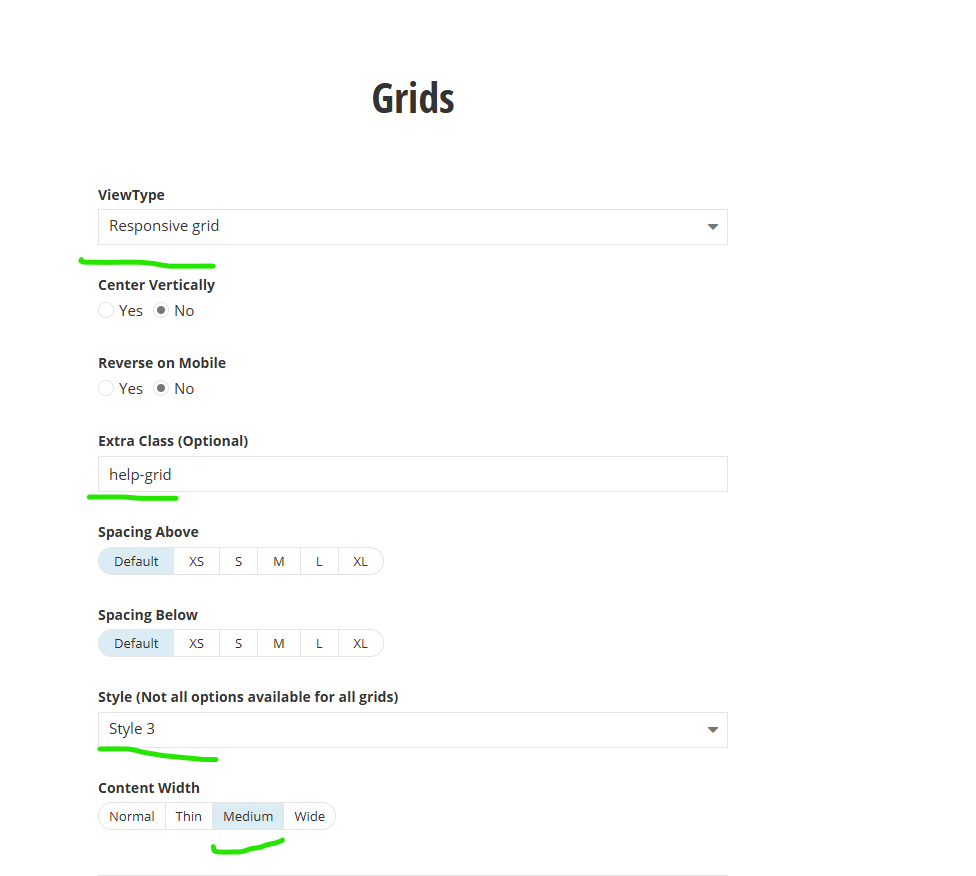
Drop a grid. set the template to Responsive Grid and the style to "Style 3". Set the width to "Medium". Add the class "help-grid". The width setting is optional, the others are important. Technically, for a 3-wide help grid, Style 1 and "wide" width could be used.

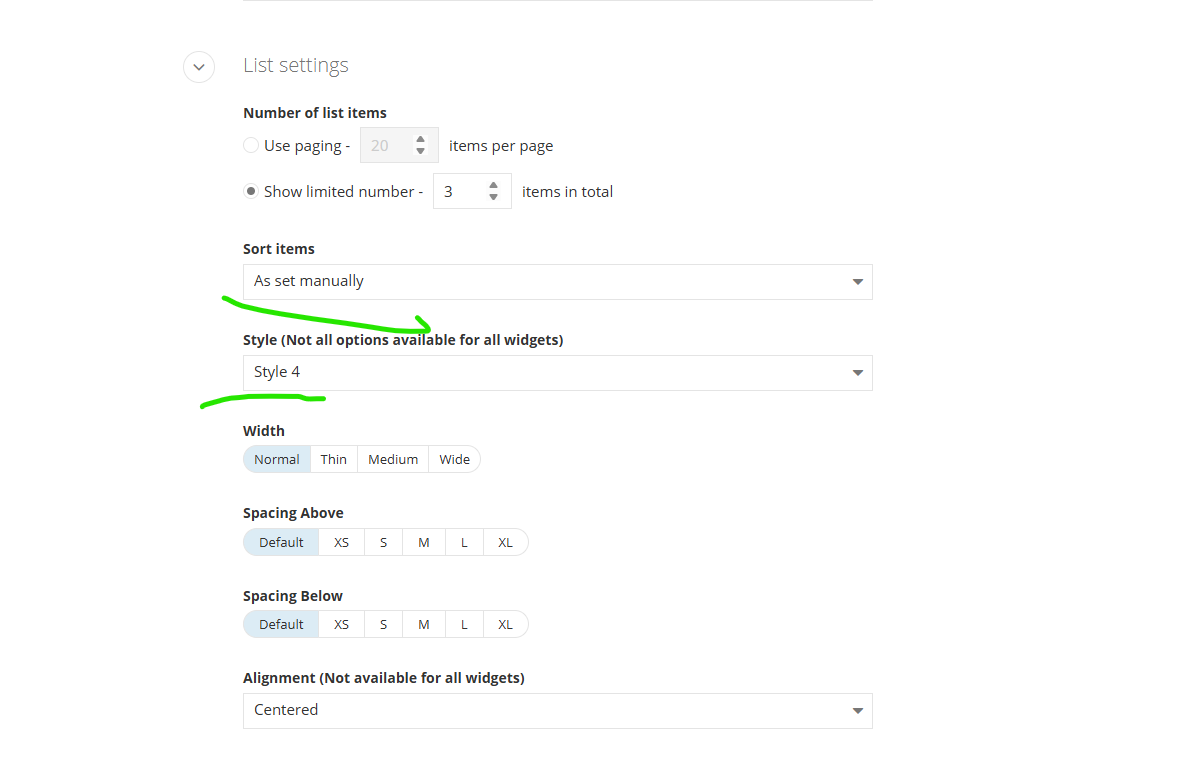
Drop FAQs. Select three. Set the Style to Style 4. 

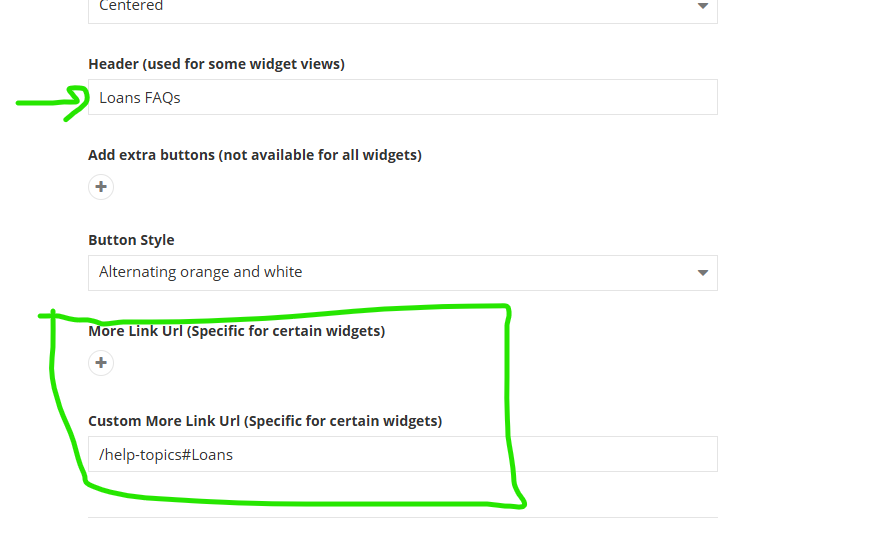
Each FAQ group's title and link are added through the Header and the two More Link fields under "List Settings". The first link allows selection of pages, the second is for pasting an url -- useful when linking to an anchor. If available, a page link will always take precedence over the custom link, so if using a custom link, ensure that More Link Url doesn't have a page selected.

Loans FAQs

How do I prevent fraud on my account?

Being proactive about fraud and scam situations is essential! You can find helpful tips and tricks for stopping fraud before it happens on our Fraud Prevention page.

What can I do if I am a fraud victim?

If you’ve provided sensitive account information to a scammer, contact us right away to help secure your accounts. If you believe you’ve become a victim of identity theft, refer to the Federal Trade Commission’s information about Identity Theft: What To Know – What To Do.
See All

Auto Loan FAQs

See All

To use similar styling and link structure for normal full-width  FAQs, the grid can simply be left out. 

Auto Loan FAQs

See All

Quicklinks

Despite the name, quicklinks should be considered as  "quicklinks and features" because it also can be used to add icon-title-summary sets to pages. These can have a link but do not need to. They can be displayed either through the "Quicklinks group" widget (discussed later) or the Content List widget.

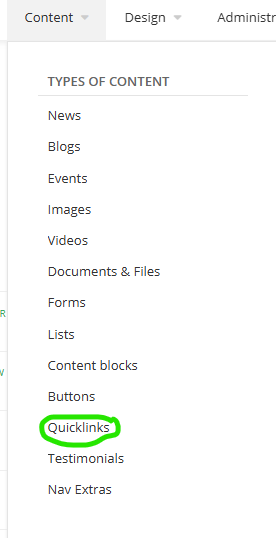
Quicklinks can be created either under Content -> Quicklinks

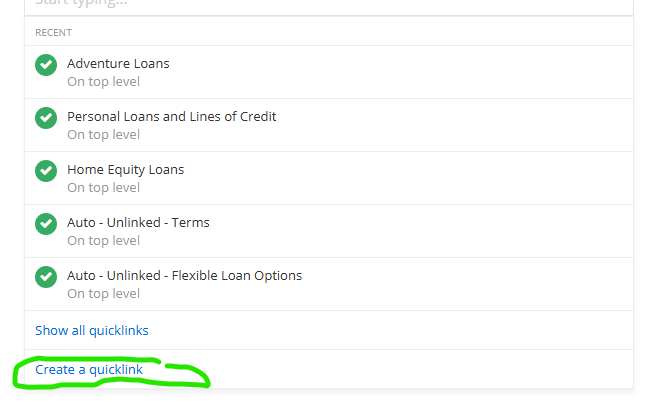
Or when selecting quicklinks to add to the list

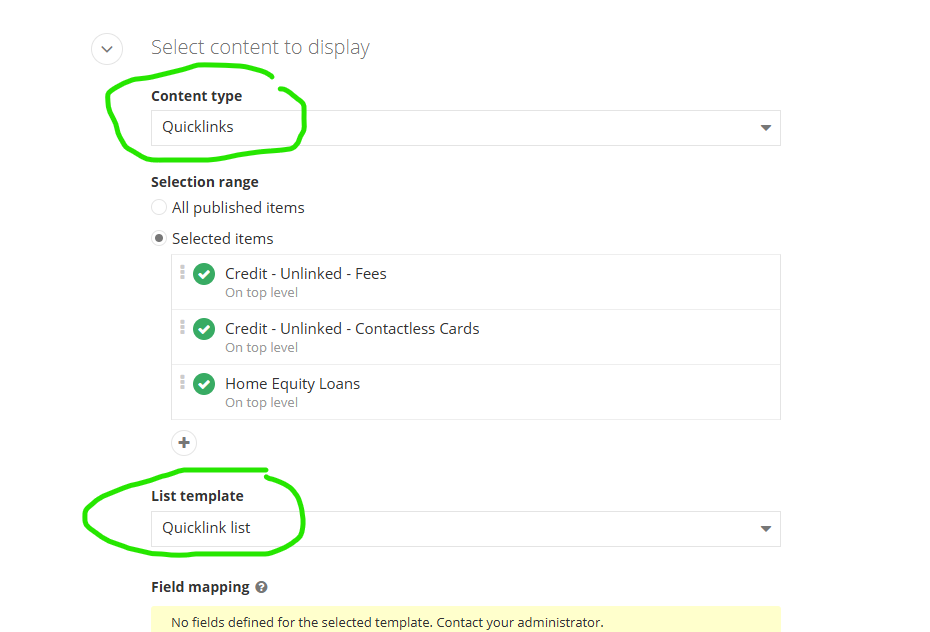
Quicklinks can be displayed through the Content List widget by setting the Content type to "Quicklinks" and the list to "Quicklink List" 


Further styles can be added to the Content List for Quicklinks if needed--for now, only one exists.

Testimonials

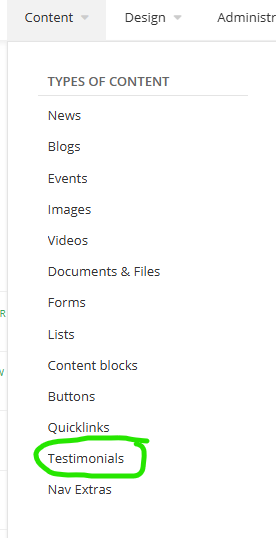
Testimonials can be created under Content -> Testimonials

Or when selecting testimonials in the content list widget.

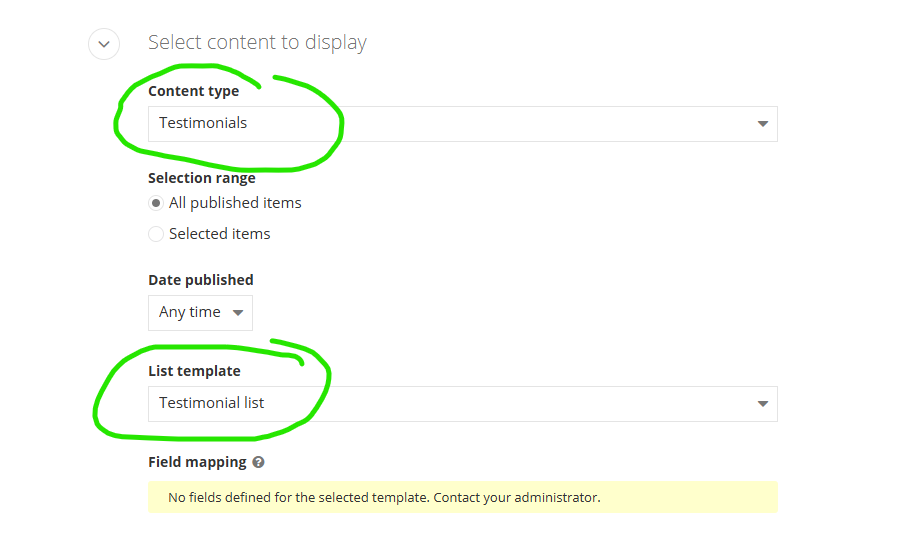
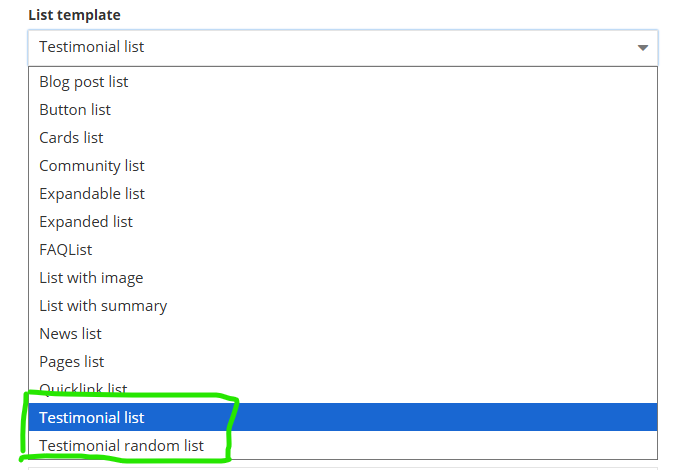
They can be shown using the content list widget with the Content type set to Testimonials and the template set to Testimonial List or Testimonial Random List. 

Testimonials have two templates: "Testimonial List" and "Testimonial Random List".


Testimonial list shows all selected testimonials, either as a list or slider. 

Style 1 is a basic list. Style 2 is a simple slider. Style 3 is the same slider, but with additional styling and a title/button area. 

My friends, family and I do all of our banking at Fibre Federal because they consistently provide such good service. Their employees and branches are so professional, and the staff is so helpful that I don't want to go to any other bank.
Maddie W., Longview, WA
It was reported to me by a life insurance company that they had a data breach and my banking information was stolen. The thief tried to charge my card, but Fibre saw the charge as suspicious and declined the charge. Thank you, Fibre Federal Credit Union, for having my back. I have a tight budget and losing any amount of my money could be devastating to me and my family.
Cherilynn
I am very satisfied with my experience, especially due to the fact it was my first time using the text feature. The agent I talked to was very professional, answered all of my questions, operated in timely fashion, and left me with a good first impression. I will be using this again because of her.
Brad O.
I used the chat feature in the Fibre Federal Credit Union app to resolve a problem with funds in one of our accounts and I couldn’t be happier with the experience. I work in a loud environment where phone calls aren’t always the best option for contacting people, so having the ability to chat with someone is a great option I think all banking institutions should implement.
Trevor N.
I would like to start off by saying that I really appreciate all the ways available to communicate with tellers: they have an online chat, call, video call, and online assistant to help with basic things. Whenever I interact with the tellers, they are kind and intelligent. I have always been able to fix the issues I come across with this credit union!
Tabatha B.
Love the Virtual Reps at the ITM. Makes my banking feel more personal even for a simple transaction.
Carolena Q.
I love being a part of the Fibre Family! Everyone is always so kind and helpful and I really appreciate the drive up ITM with virtual help!
Melissa T.
Money was never something that we talked about growing up, so it’s something I really try to focus on with my kids. My kids each have accounts at the credit union. My daughter just turned six and feels like such a big girl when she’s able to make that transaction with a teller. If I had had those conversations with my family, I could have had more opportunities to do the things that I wanted to do.
Shantelle
The loan department at Fibre CU was extremely helpful with our needs and were quick to communicate and help solve any concerns we had. Would recommend Fibre CU and their helpful staff!
Rolly B.
Great customer service! I accidentally made a loan payment 2x and instead of telling me, ‘Sorry, Charlie,' as I expected, they reversed it right away no questions asked! Never had a bad experience with them. Great job all.
Danielle
The first loan I got was for a pickup, then I had an RV, and now I have a boat loan. Each loan was simple and went through so good that I’ve come back to deal with Kim every time. That was the quality that made me decide to switch to Fibre Federal.
Kelly
They’ve never wanted to push me into any kind of direction as far as loans. We sit down, they tell you the truth [and] the right path to go.
Mark
We have both personal and business accounts with Fibre, and have only good things to say! The staff is extremely helpful and friendly, especially in the business aspect of things. We couldn't ask for a better credit union!
Bryce B.
Fibre FCU has been a shining light for our business. We are always met with professionalism and know they care about us and the business we have brought to the Longview community. Thank you, thank you FibreFCU. We look forward to another great year.
Martha S.
I have been with them for both personal and business accounts. I find their checking to be great (online is easy to use) and their Choice Checking account pays some of the best rates on my balance. Visa account has some of the lowest interest rates available.
David L.
Very helpful and informative. All my questions were answered to the fullest and everything was made crystal clear in reference to opening my accounts.
Jordan M.
Some of the best customer service I've ever experienced. Fun, genuine people who want to get to know you and have an uplifting attitude. When I ask a question, they know exactly how to fix whatever I need. Super helpful people who are passionate about that they do. 5/5 stars!
Josiah D.
They are always friendly, fast, and always helpful with anything you need. I come here for all my banking needs and always leave feeling appreciated. This place is absolutely amazing.
Lisa W.
Best financial institution I have ever used! Super friendly, helpful staff members who give excellent service and are very knowledgeable about their products and services. I love how easy it is to talk to a person or get assistance when needed.
Geoffrey P.
Fibre Federal have been my backbone in every time of need. They have been my credit union now for nearly 10 years and I would not have it any other way! Thank you to Fibre Federal for always being amazing and going above and beyond for your members even if we aren't on top of the game ourselves!
Holly
My friends, family and I do all of our banking at Fibre Federal because they consistently provide such good service. Their employees and branches are so professional, and the staff is so helpful that I don't want to go to any other bank.
Maddie W., Longview, WA
They are always friendly, fast, and always helpful with anything you need. I come here for all my banking needs and always leave feeling appreciated. This place is absolutely amazing.
Lisa W.
Best financial institution I have ever used! Super friendly, helpful staff members who give excellent service and are very knowledgeable about their products and services. I love how easy it is to talk to a person or get assistance when needed.
Geoffrey P.
They’ve never wanted to push me into any kind of direction as far as loans. We sit down, they tell you the truth [and] the right path to go.
Mark
Love the Virtual Reps at the ITM. Makes my banking feel more personal even for a simple transaction.
Carolena Q.
Great customer service! I accidentally made a loan payment 2x and instead of telling me, ‘Sorry, Charlie,' as I expected, they reversed it right away no questions asked! Never had a bad experience with them. Great job all.
Danielle
The first loan I got was for a pickup, then I had an RV, and now I have a boat loan. Each loan was simple and went through so good that I’ve come back to deal with Kim every time. That was the quality that made me decide to switch to Fibre Federal.
Kelly
Fibre Federal have been my backbone in every time of need. They have been my credit union now for nearly 10 years and I would not have it any other way! Thank you to Fibre Federal for always being amazing and going above and beyond for your members even if we aren't on top of the game ourselves!
Holly
The loan department at Fibre CU was extremely helpful with our needs and were quick to communicate and help solve any concerns we had. Would recommend Fibre CU and their helpful staff!
Rolly B.
Money was never something that we talked about growing up, so it’s something I really try to focus on with my kids. My kids each have accounts at the credit union. My daughter just turned six and feels like such a big girl when she’s able to make that transaction with a teller. If I had had those conversations with my family, I could have had more opportunities to do the things that I wanted to do.
Shantelle
I have been with them for both personal and business accounts. I find their checking to be great (online is easy to use) and their Choice Checking account pays some of the best rates on my balance. Visa account has some of the lowest interest rates available.
David L.
It was reported to me by a life insurance company that they had a data breach and my banking information was stolen. The thief tried to charge my card, but Fibre saw the charge as suspicious and declined the charge. Thank you, Fibre Federal Credit Union, for having my back. I have a tight budget and losing any amount of my money could be devastating to me and my family.
Cherilynn
We have both personal and business accounts with Fibre, and have only good things to say! The staff is extremely helpful and friendly, especially in the business aspect of things. We couldn't ask for a better credit union!
Bryce B.
I love being a part of the Fibre Family! Everyone is always so kind and helpful and I really appreciate the drive up ITM with virtual help!
Melissa T.
I used the chat feature in the Fibre Federal Credit Union app to resolve a problem with funds in one of our accounts and I couldn’t be happier with the experience. I work in a loud environment where phone calls aren’t always the best option for contacting people, so having the ability to chat with someone is a great option I think all banking institutions should implement.
Trevor N.
Some of the best customer service I've ever experienced. Fun, genuine people who want to get to know you and have an uplifting attitude. When I ask a question, they know exactly how to fix whatever I need. Super helpful people who are passionate about that they do. 5/5 stars!
Josiah D.
I am very satisfied with my experience, especially due to the fact it was my first time using the text feature. The agent I talked to was very professional, answered all of my questions, operated in timely fashion, and left me with a good first impression. I will be using this again because of her.
Brad O.
I would like to start off by saying that I really appreciate all the ways available to communicate with tellers: they have an online chat, call, video call, and online assistant to help with basic things. Whenever I interact with the tellers, they are kind and intelligent. I have always been able to fix the issues I come across with this credit union!
Tabatha B.
Very helpful and informative. All my questions were answered to the fullest and everything was made crystal clear in reference to opening my accounts.
Jordan M.
Fibre FCU has been a shining light for our business. We are always met with professionalism and know they care about us and the business we have brought to the Longview community. Thank you, thank you FibreFCU. We look forward to another great year.
Martha S.

Customizable buttons Customizable Title

Great Service deserves to be celebrated. Tell us about the experience that made a difference for you!
Great customer service! I accidentally made a loan payment 2x and instead of telling me, ‘Sorry, Charlie,' as I expected, they reversed it right away no questions asked! Never had a bad experience with them. Great job all.
Danielle
I would like to start off by saying that I really appreciate all the ways available to communicate with tellers: they have an online chat, call, video call, and online assistant to help with basic things. Whenever I interact with the tellers, they are kind and intelligent. I have always been able to fix the issues I come across with this credit union!
Tabatha B.
The loan department at Fibre CU was extremely helpful with our needs and were quick to communicate and help solve any concerns we had. Would recommend Fibre CU and their helpful staff!
Rolly B.
They’ve never wanted to push me into any kind of direction as far as loans. We sit down, they tell you the truth [and] the right path to go.
Mark
Best financial institution I have ever used! Super friendly, helpful staff members who give excellent service and are very knowledgeable about their products and services. I love how easy it is to talk to a person or get assistance when needed.
Geoffrey P.
I love being a part of the Fibre Family! Everyone is always so kind and helpful and I really appreciate the drive up ITM with virtual help!
Melissa T.
Money was never something that we talked about growing up, so it’s something I really try to focus on with my kids. My kids each have accounts at the credit union. My daughter just turned six and feels like such a big girl when she’s able to make that transaction with a teller. If I had had those conversations with my family, I could have had more opportunities to do the things that I wanted to do.
Shantelle
The first loan I got was for a pickup, then I had an RV, and now I have a boat loan. Each loan was simple and went through so good that I’ve come back to deal with Kim every time. That was the quality that made me decide to switch to Fibre Federal.
Kelly
I have been with them for both personal and business accounts. I find their checking to be great (online is easy to use) and their Choice Checking account pays some of the best rates on my balance. Visa account has some of the lowest interest rates available.
David L.
I am very satisfied with my experience, especially due to the fact it was my first time using the text feature. The agent I talked to was very professional, answered all of my questions, operated in timely fashion, and left me with a good first impression. I will be using this again because of her.
Brad O.
We have both personal and business accounts with Fibre, and have only good things to say! The staff is extremely helpful and friendly, especially in the business aspect of things. We couldn't ask for a better credit union!
Bryce B.
Fibre FCU has been a shining light for our business. We are always met with professionalism and know they care about us and the business we have brought to the Longview community. Thank you, thank you FibreFCU. We look forward to another great year.
Martha S.
It was reported to me by a life insurance company that they had a data breach and my banking information was stolen. The thief tried to charge my card, but Fibre saw the charge as suspicious and declined the charge. Thank you, Fibre Federal Credit Union, for having my back. I have a tight budget and losing any amount of my money could be devastating to me and my family.
Cherilynn
Love the Virtual Reps at the ITM. Makes my banking feel more personal even for a simple transaction.
Carolena Q.
Very helpful and informative. All my questions were answered to the fullest and everything was made crystal clear in reference to opening my accounts.
Jordan M.
Fibre Federal have been my backbone in every time of need. They have been my credit union now for nearly 10 years and I would not have it any other way! Thank you to Fibre Federal for always being amazing and going above and beyond for your members even if we aren't on top of the game ourselves!
Holly
They are always friendly, fast, and always helpful with anything you need. I come here for all my banking needs and always leave feeling appreciated. This place is absolutely amazing.
Lisa W.
I used the chat feature in the Fibre Federal Credit Union app to resolve a problem with funds in one of our accounts and I couldn’t be happier with the experience. I work in a loud environment where phone calls aren’t always the best option for contacting people, so having the ability to chat with someone is a great option I think all banking institutions should implement.
Trevor N.
My friends, family and I do all of our banking at Fibre Federal because they consistently provide such good service. Their employees and branches are so professional, and the staff is so helpful that I don't want to go to any other bank.
Maddie W., Longview, WA
Some of the best customer service I've ever experienced. Fun, genuine people who want to get to know you and have an uplifting attitude. When I ask a question, they know exactly how to fix whatever I need. Super helpful people who are passionate about that they do. 5/5 stars!
Josiah D.

Testimonial Random list shows a random single testimonial from those selected. 

Style 1 is a designed element. Style 2 is a simple presentation that can be dropped inside any section. 

The title is customizable too.

I have been with them for both personal and business accounts. I find their checking to be great (online is easy to use) and their Choice Checking account pays some of the best rates on my balance. Visa account has some of the lowest interest rates available.
David L.

Real Words, Real People from the PNW

Money was never something that we talked about growing up, so it’s something I really try to focus on with my kids. My kids each have accounts at the credit union. My daughter just turned six and feels like such a big girl when she’s able to make that transaction with a teller. If I had had those conversations with my family, I could have had more opportunities to do the things that I wanted to do.
Shantelle

Documents List

Provide a simple list of documents.

docx
test (docx)

Featured Blogs

Show the latest post from each selected blog. 

Community Communities First Program Founded in 2018, our Communities First Program supports education and healthcare related services. To date, we've donated $284,500 to seven community college foundations and 13 hospital foundations in our service areas. Read More
Financial Wellness Blog How Business Equipment Loans Can Help Your Company Grow Growing a business is always a tough balancing act between driving revenue and paying the bills. The right business equipment loan can help you get off the ground or reach the next level by making it easier to acquire the critical machinery or technology your company needs. Read More

Number Feature

Is a widget implemented to showcase numbers. Currently, the only style is the one shown on the homepage. It was set up as a widget so that the numbers can be easily changed at any time. It can be extended with more styles if needed for landing pages or promotionals (Contact your LKCS sales rep.) 

$1,000 Featured dollars.
500 This is a test number.

Quicklinks Group

This was set up to allow a group of quicklinks with a title and image to be showcased. The title of the main template defaults to "Other Members Also Liked" but can be customized. It can also be used to generate a list of features with the same special styling if quicklinks without links are selected.

It can be extended with more templates as needed.

Steps

Another widget with specialized styling. More templates can be added if needed.

  1. 1 Step 1 Step 1 Description

  2. 2 Careful! Do not make these too long.

Comparison Feature

Scroll all the way down to the special section to find this widget.

Compare

Product 1

Use the Comparison Feature to compare items Yes Click on More Details to access ability to add product rows
Row titles are optional Use Small for normal content
On mobile Basic is large
Row titles are used to label No No creates the X
Each column. Yes Yes creates the check
Schedule an Appointment

Product 2

Use the Comparison Feature to compare items Yes Types can be mixed between products if needed
Row titles are optional Yes
On mobile No
Row titles are used to label Yes
Each column. If an uneven number are provided, the widget will automatically generate rows to compensate. 
Apply for a Credit Card

Additional Widgets 

These were created later and do not have a full guide.

August 30, 2013

Received NCUA's Low-Income Designation (LDI), which extends the credit union's resources, funding, and flexibility to better serve people with limited incomes.

August 8, 2025

Designated a Juntos Avanzamos credit union, recognizing our commitment to empowering Hispanic and immigrant communities and supporting financial well-being for all.

August 24, 2022

Field of Membership expansion into Clark, Grays Harbor, Lewis, and Skamania Counties in Washington.

May 1, 2015

Acquired TLC Federal Credit Union, expanding the branch network and Field of Membership into Tillamook and Lincoln Counties, along the Oregon Coast.

June 13, 2013

Field of Membership expansion into Pacific County in Washington.

September 24, 2012

Field of Membership expansion into Columbia and Clatsop Counties in Oregon, and Wahkiakum County in Washington.

January 1, 2008

Merged with 1st Citizens Federal Credit Union in Longview, WA.

January 1, 1982

Merged with International Paper Company (IPCO) Federal Credit Union in Longview, WA.

September 1975

Fibre Federal changed to a community charter, allowing non-Fibre mill workers and their families in Cowlitz County to become members.

1971

Main Office branch opened (and is still in use to this day!).
Future Home of Fibre Federal Credit Union - People Helping People

1937

Sixty-three employees of Longview Fibre Company pooled together $315 and founded Fibre Federal Credit Union.

Anchor: richTextHtml

Accessing the HTML view in the Rich Text Editor

Although most of the site's features should not require anyone to do this, there exist a few column styles for paragraphs and lists and some other special features that could not be added to the sitefinity editor naturally. Additionally, this view can be used to clean up or double check code when needed.
To access the html view, click somewhere in the text box and then select the  </> in the top right corner. (If the </> isn't visible, the window may need to be made larger.) 


This view should not be used to add iframes, embed codes, etc. Those may get "cleansed" by the rich text editor's code cleaner. For embeds, please use the scripts and css widget instead.

Multi-column paragraphs

In order to avoid having to use the html view at all, these starter templates can just be copied where desired to preserve the relevant styling. To make a list or paragraph that already exists contain columns, tab to the html view and add class="cols-2" or class="cols-3" to the paragraph or list. A paragraph with cols-2 code looks like this, as an example of placement for the class:

<p class="cols-2">Two column paragraph copy Lorem Ipsum Dolor ist amet Lorem ipsum dolor sit amet, consectetur adipisicing elit, sed do eiusmod tempor incididunt ut labore et dolore magna aliqua. Ut enim ad minim veniam, quis nostrud exercitation ullamco laboris nisi ut

    aliquip ex ea commodo consequat. Duis aute irure dolor in reprehenderit in voluptate velit esse cillum dolore eu fugiat nulla pariatur.</p>

And a list looks like this:

<ul class="cols-2">
    <li>List item 1</li>
    <li>List item 2</li>
    <li>List Item 3</li>
    <li>List item 4</li>
</ul>


For lists, the class check-list can also be added to unordered lists to invoke special styling, with examples below: 

<ul class="check-list ">
    <li>List item 1</li>
    <li>List item 2</li>
    <li>List Item 3</li>
    <li>List item 4</li>
</ul>

Renders as : 

  • List item 1
  • List item 2
  • List Item 3
  • List item 4

With columns, the check list's code looks like:

<ul class="check-list cols-2">

    <li>List item 1</li>
    <li>List item 2</li>
    <li>List Item 3</li>
    <li>List item 4</li>
</ul>


cols-2

Two column paragraph copy Lorem Ipsum Dolor ist amet Lorem ipsum dolor sit amet, consectetur adipisicing elit, sed do eiusmod tempor incididunt ut labore et dolore magna aliqua. Ut enim ad minim veniam, quis nostrud exercitation ullamco laboris nisi ut aliquip ex ea commodo consequat. Duis aute irure dolor in reprehenderit in voluptate velit esse cillum dolore eu fugiat nulla pariatur.

cols-3

Two column paragraph copy Lorem Ipsum Dolor ist amet Lorem ipsum dolor sit amet, consectetur adipisicing elit, sed do eiusmod tempor incididunt ut labore et dolore magna aliqua. Ut enim ad minim veniam, quis nostrud exercitation ullamco laboris nisi ut aliquip ex ea commodo consequat. Duis aute irure dolor in reprehenderit in voluptate velit esse cillum dolore eu fugiat nulla pariatur.

Multi-column lists

cols-2

  1. List item 1
  2. List item 2
  3. List Item 3
  4. List item 4

cols-3

  1. List item 1
  2. List item 2
  3. List Item 3
  4. List item 4
  5. List Item 5
  6. List item 6

Examples of interactions with dark backgrounds

Style Guide

This page is a guide to the text and widget styles available on the site.


Text Styles


H2 Title

H3 Title

H4 Title

H5 Title
H6 Title

Paragraph Copy Lorem Ipsum

Two column paragraph copy Lorem Ipsum Dolor ist amet Lorem ipsum dolor sit amet, consectetur adipisicing elit, sed do eiusmod tempor incididunt ut labore et dolore magna aliqua. Ut enim ad minim veniam, quis nostrud exercitation ullamco laboris nisi ut aliquip ex ea commodo consequat. Duis aute irure dolor in reprehenderit in voluptate velit esse cillum dolore eu fugiat nulla pariatur.

Color Text

Color2 Text

Color3 Text

Grey Text

Large Text

Small Text

Uppercase Text

Thin Text

Extra Bold Text

Color, Color2, Color 3, and Grey Text in a title

Lists

  • List Item 1
    1. List Item 1
    2. List Item 2
      • List item 1
      • List item 2
    • List item 1
    • List item 2
  • List Item 2
  • List Item 3
  • List item 4
  1. List Item 1
  2. List Item 2
    • List item 1
    • List item 2
  3. List Item 3
  4. List item 4
  • List item 1
  • List item 2
  • List Item 3
  • List item 4
  • List Item 1
    1. List Item 1
    2. List Item 2
      • List item 1
      • List item 2
    • List item 1
    • List item 2
  • List Item 2
  • List Item 3
  • List item 4
  • List item 1
  • List item 2
  • List Item 3
  • List item 4

Other

Callout Text Here

Quotation Cite

Line Rules

Separator


Flip badge callout

The flip badge would need a new color set of image designed. 

Splash Heading

Custom Title

Buying a home is a major financial decision, and the process can feel overwhelming even if you’ve done it before.

There’s more to it than finding a house you like. You’ll need to understand your budget, review your credit, compare mortgage types, get pre-approved, make an offer, prepare for closing costs, and plan for the ongoing expenses that come with owning a home. Fibre Federal Credit Union and TLC’s mortgage loans are a useful starting point for reviewing home loan programs before you apply. 

The process is easier to manage when you break it into steps. This guide walks through the homeownership journey from early planning to closing day, plus what to know about managing or refinancing your mortgage after you buy.

MAKE SURE YOU’RE FINANCIALLY READY

Before you start browsing home listings, take time to review whether buying makes sense for your budget and lifestyle. Homeownership allows you to build equity and have more control over your space, but it also comes with expenses renters usually don’t have, including repairs, maintenance, property taxes, and insurance. 

Buying may make sense if:

  • You have a steady income

  • Your monthly debts are manageable

  • You have savings set aside for upfront costs

  • You have an emergency fund for unexpected expenses

  • You plan to stay in the home for several years

If you’re still comparing renting and buying, use the rent vs. buy calculator to estimate how the numbers may look based on your current situation.

Check your credit

Your credit score may affect whether you qualify for a mortgage and the interest rate you receive. Even a small difference in your rate can change your monthly payment and the total interest paid over the life of the loan.

Before applying, review your credit report for errors, make on-time payments, and work on paying down high credit card balances. Credit improvements can take several months to show, so it’s best to start early.

Know your debt-to-income ratio

Lenders also review your debt-to-income ratio, or DTI. This compares your gross monthly income to your monthly debt payments, including credit cards, auto loans, student loans, and other recurring obligations.

Many lenders prefer a DTI of 36% or lower for home loans, although requirements can vary by loan type and borrower profile. Use the debt-to-income calculator to estimate your ratio before you apply. If your DTI is higher than you’d like, paying down debt or avoiding new loans before applying may improve your position.

Plan for expenses

Homebuying costs go beyond the purchase price. Before you apply, budget for upfront expenses as well as the costs that continue after closing. 

At a minimum, budget for:

  • Down payment: This varies by loan type. Some loans require little or no down payment, while others may require more.

  • Closing costs: These are the fees and expenses paid to complete the purchase and are commonly 2% to 5% of the loan amount. In some cases, the closing costs can be negotiated to be paid by the seller.

  • Mortgage insurance: If your down payment is below 20% on a conventional loan, you may need private mortgage insurance, or PMI. FHA, USDA, and VA loans have their own mortgage insurance or funding fee structures.

  • Taxes and insurance: Property taxes and homeowners insurance can affect your monthly payment and total housing budget.

  • Cash reserves: A home inspection may not catch every issue, so it’s smart to keep savings available for repairs, maintenance, and move-in costs.

UNDERSTAND YOUR MORTGAGE OPTIONS

Mortgage loans are not all structured the same way. The loan type you choose can affect your down payment, monthly payment, mortgage insurance, rate structure, and long-term costs.

For a deeper breakdown, Fibre Federal & TLC also has a guide to different types of home loans

Fixed-Rate Mortgages

A fixed-rate mortgage keeps the same interest rate for the full loan term. That means the principal and interest portion of your payment stays consistent, which can make monthly budgeting more predictable.

Depending on the lender and loan program, down payments may start as low as 3%. If you put less than 20% down on a conventional mortgage, PMI may be required until you build enough equity.

The loan term also matters. A shorter term may come with a higher monthly payment but less total interest, while a longer term may lower the monthly payment but increase the total interest paid. Before choosing, compare how different mortgage terms affect your loan.

Adjustable-Rate Mortgages (ARMs)

An adjustable-rate mortgage, or ARM, starts with an introductory rate for a set period. After that period ends, the rate can adjust based on market conditions and the terms of the loan.

An ARM may appeal to buyers who expect to sell, refinance, or pay off the loan before the introductory period ends. Because the payment can change later, it’s important to understand the adjustment schedule, rate caps, and how much your payment could increase.

FHA Loans

FHA loans are backed by the Federal Housing Administration and issued by private lenders. They can work well for borrowers with limited down payment savings or credit history that does not meet conventional loan requirements. 

Down payments can be as low as 3.5%. FHA loans also require mortgage insurance, including an upfront mortgage insurance premium and an annual premium paid monthly. For many borrowers, FHA mortgage insurance lasts for the life of the loan, although buyers who put at least 10% down may have it removed after 11 years.

Because FHA and conventional loans have different credit, down payment, and mortgage insurance requirements, it’s worth comparing FHA loans vs. conventional mortgages before deciding which path makes sense.

USDA Loans

USDA loans are backed by the U.S. Department of Agriculture and issued by private lenders. They apply to eligible homes in certain rural and suburban areas, and qualified borrowers can buy with no down payment. 

Borrowers must meet income and property eligibility requirements. USDA loans also include an upfront guarantee fee and an ongoing annual fee paid monthly.

VA Loans

VA loans are backed by the U.S. Department of Veterans Affairs and issued by private lenders. They are available to eligible service members, veterans, and surviving spouses.

VA loans do not require a down payment or PMI, which can lower the upfront cost of buying. Borrowers need a Certificate of Eligibility, or COE, to confirm they meet service requirements. Most VA loans also include a one-time funding fee, which can be paid at closing or rolled into the loan.

Jumbo Loans

A jumbo loan is a mortgage that exceeds the conventional loan limits set by the Federal Housing Finance Agency. The exact threshold depends on the property’s location.

Because jumbo loans are larger and are not backed by a government agency, qualification requirements are usually more strict. Borrowers may need a higher credit score, a larger down payment, stronger cash reserves, and a lower DTI ratio.

COMPARE LENDERS AND LOAN ESTIMATES

Once you understand the main mortgage types, compare lenders before choosing where to apply. Rates matter, but they are not the only factor. Review the annual percentage rate, closing costs, lender fees, loan terms, estimated monthly payment, and how clearly each lender explains the process.

Use the mortgage comparison calculator to compare two loan scenarios side by side. This shows how rate, term, fees, and payment differences affect the total cost of borrowing. 

A credit union like Fibre Federal & TLC also brings local knowledge to the mortgage process. Our loan officers understand our area and can explain which loan programs match your budget, timeline, and homebuying plans. 

GET PRE-APPROVED FOR A MORTGAGE

Pre-approval is one of the most important early steps in the homebuying process. During pre-approval, a lender reviews your finances and estimates how much you may be able to borrow. It’s important to note that this process includes a hard credit check. 

Use the loan amount calculator to estimate how different loan amounts affect your monthly payment. 

To apply for mortgage pre-approval, be ready to provide:

  • Government-issued photo ID

  • Recent pay stubs

  • Tax returns and W-2s

  • Recent bank statements

  • A list of monthly debts

  • Documentation for other income or assets, if applicable

Once you’re pre-approved, your lender will provide a pre-approval letter that you can share with your real estate agent and sellers. This can strengthen your offer because it shows you have already begun the financing process.

Pre-approval is not the same as final loan approval. Final approval includes a more detailed review of your finances, another hard credit check, a property appraisal, a title review, and underwriting.

FIND YOUR HOME AND MAKE AN OFFER

After pre-approval, you can start searching within a realistic price range. A real estate agent can walk you through local listings, schedule showings, and compare homes based on price, condition, location, and market demand.

When you find a home you want to buy, your agent will prepare an offer that includes the purchase price, proposed closing date, earnest money deposit, and any contingencies. Common contingencies include financing, appraisal, and inspection protections. These can give you a way to renegotiate or walk away if the home does not appraise, the loan is not approved, or the inspection reveals major issues.

COMPLETE THE HOMEBUYING PROCESS

If your offer is accepted, the purchase moves into the final approval and closing stage. Several things happen during this period:

  • Home inspection: The inspection looks for issues with the property’s structure, systems, and condition. If problems are found, you may be able to negotiate repairs, credits, or a price adjustment.

  • Appraisal: Your lender orders an appraisal to confirm the home’s value supports the loan amount.

  • Underwriting: The lender reviews your income, employment, credit, assets, debts, and property details before issuing final approval.

  • Final walkthrough: Before closing, you’ll walk through the home to confirm it is in the agreed-upon condition.

  • Closing: You’ll review and sign loan documents, pay closing costs, and receive the final loan terms in your closing disclosure.

Closing costs can include lender fees, title fees, appraisal costs, prepaid taxes, prepaid insurance, and escrow deposits. Use the closing costs calculator to estimate how much you may need to bring to closing.

Once the documents are signed and funds are transferred, you receive the keys to your new home.

PLAN FOR THE ONGOING COSTS OF HOMEOWNERSHIP 

The cost of owning a home does not end at closing. Your monthly mortgage payment may include principal, interest, property taxes, homeowners insurance, mortgage insurance, and HOA dues if they apply. Some of these costs may be included in an escrow account and paid by your lender on your behalf.

You’ll also need to plan for regular upkeep and unexpected repairs. Common homeowner expenses include:

  • Property taxes

  • Homeowners insurance

  • Utilities

  • Yard care

  • HOA fees, if applicable

  • Maintenance and repairs

  • Appliance, HVAC, roof, plumbing, or electrical repairs

Many homeowners set aside 1% to 3% of their home’s value each year for maintenance and repairs. For a $300,000 home, that equals about $3,000 to $9,000 annually. A dedicated maintenance fund can make it easier to handle larger repairs without relying on credit cards or draining emergency savings.

MANAGE YOUR MORTGAGE AFTER PURCHASE 

After you buy your home, each mortgage payment builds equity as you pay down the loan balance. Extra principal payments can build equity faster. Even one extra payment per year can shorten the life of a 30-year mortgage and lower total interest costs.

As your equity grows, you could borrow against it with a home equity loan or home equity line of credit. Homeowners often use these funds for home improvements, repairs, or larger planned purchases, but the loan uses your home as collateral, so it’s important to borrow carefully. 

You may also decide to refinance your mortgage later. Refinancing replaces your current home loan with a new one. Homeowners may refinance to lower their interest rate, change the loan term, move from an adjustable rate to a fixed rate, adjust their monthly payment, or borrow from available equity. If you’re weighing those choices, compare a home equity loan vs. a cash-out refinance before deciding.

Refinancing does come with costs, commonly 2% to 5% of the loan amount. It may not make sense if the savings are too small, you plan to move soon, or you are already close to paying off the loan. Use the refinance calculator to compare your current loan with a new loan before deciding.

GET THE KEYS TO YOUR NEW HOME

Buying a home is easier to navigate when you understand each step before you get there. Start by reviewing your budget and credit, comparing mortgage types, getting pre-approved, preparing for closing costs, and planning for the ongoing expenses that come with owning a home.

Fibre Federal & TLC can walk you through the mortgage process and explain available home loan programs based on your budget, timeline, and property plans.

Ready to begin? Review your mortgage loan choices and take the next step toward homeownership.
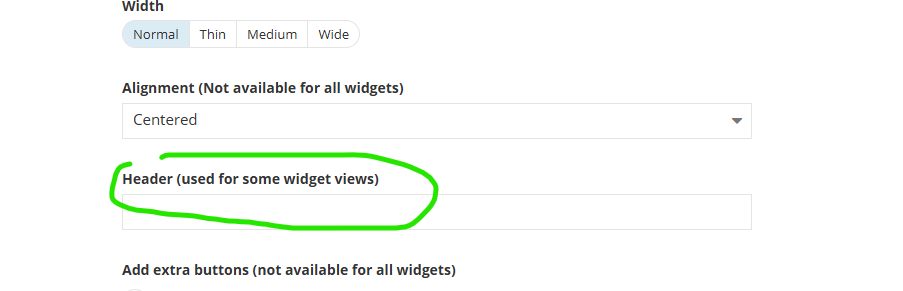
Explore Our Mortgage Loans

Frequently Asked Questions

Need technical support or have additional questions about Digital Wallets?

As much as we’d like to help you with all your concerns and questions, “technical” means different things to different smartphone users! But check out our handy list of providers who can help you get digital wallet set up on your mobile device today. By clicking on your mobile provider, you can get answers on how to use digital wallet and which devices are compatible.

If my card is blocked, can I still use my Digital Wallet to make purchases?

Fibre Federal Digital Wallet does not transfer your card number data but uses a unique “token” code for each transaction. This process is called “tokenization” and it helps safeguard your card information when you make a purchase.

This means that when you make a purchase, the digital wallet will generate a token instead of sending your credit or debit card information to the merchant. The token is used to process the payment while your personal information stays secure.

Plus, as an extra layer of protection, access to your Fibre Federal Digital Wallet is protected by a PIN or other security measure to prevent unwanted access.

Finally, by storing your cards digitally, you can worry less about them being lost or stolen. 

What do I do if I lose my device?

Password protect your smartphone, and install anti-virus software on your phone, such as Avast. Phones have been the latest targeting in SMS messaging, and apps that mimic banking apps, or run while using banking apps.

If you lose your device, contact your cell phone provider immediately. As a precaution, you can contact us at 1-800-205-7872 during business hours or 1-833-462-0796 after hours to block your card.


What do I do if my debit or credit card is lost or stolen?

If your card is lost or stolen, we are here to help. If you report suspicious activity to us we will stop further use of the impacted card, replace it and issue a new card number at no cost to you. Contact our 24/7 Card Care Center at 1-833-462-0796.

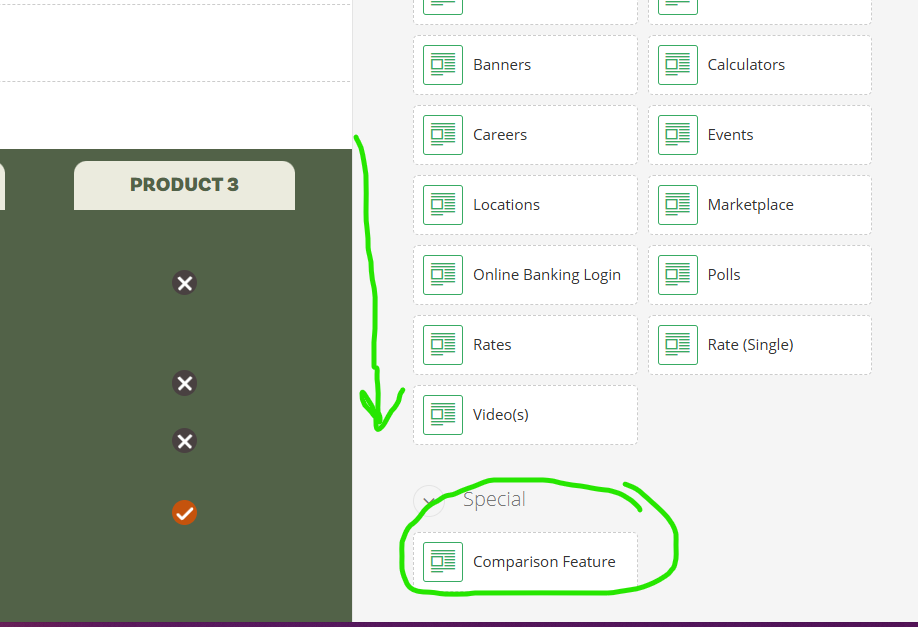
Real Words, Real People from the PNW

The loan department at Fibre CU was extremely helpful with our needs and were quick to communicate and help solve any concerns we had. Would recommend Fibre CU and their helpful staff!
Rolly B.
Translate »